FREE SHIPPING FOR ORDERS OVER $199
60 DAYS RETURN POLICY
5% OFF FOR NEWSLETTER-SIGN UP
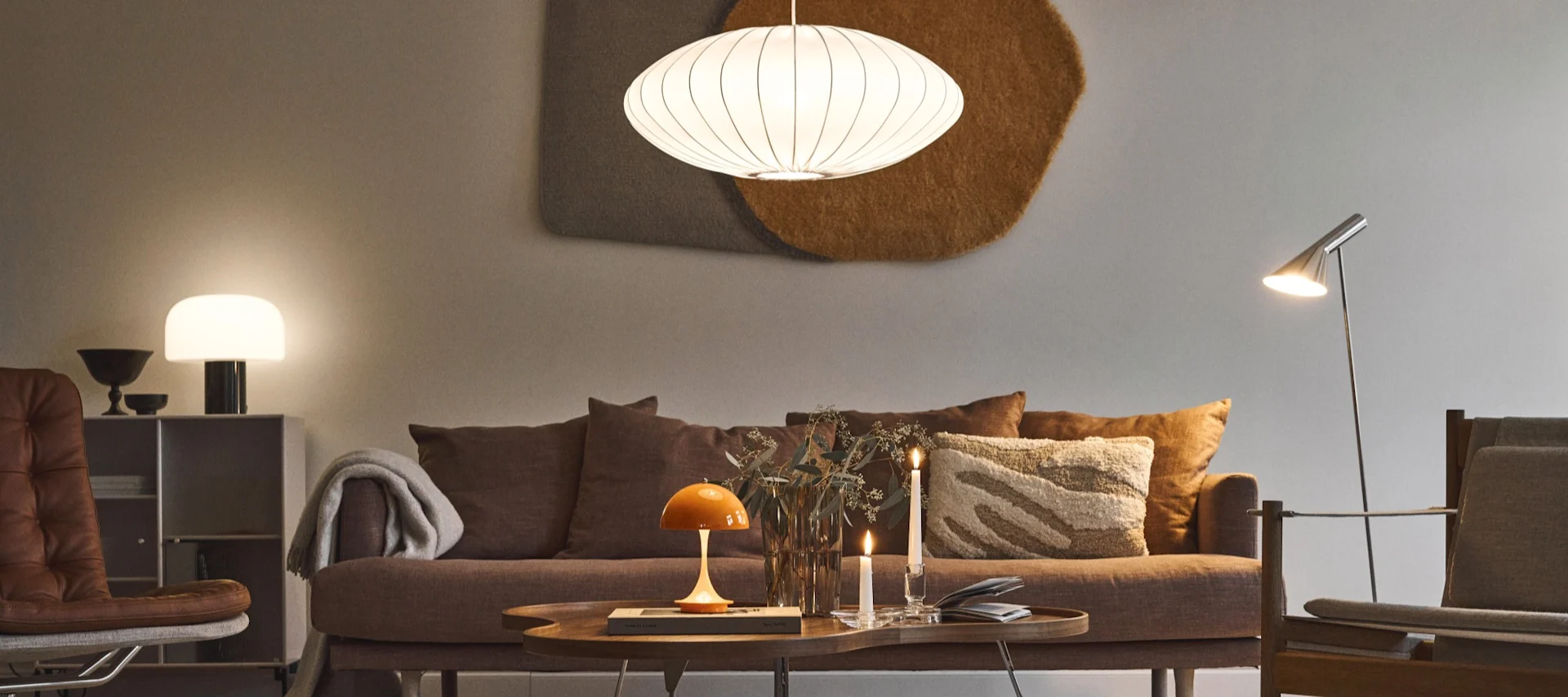
A guide to choosing the right ceiling light for your living room - 7 Tips & Ideas
7 Tips for choosing a living room ceiling light
Things to consider:
1. Need & use: What are the needs of your living room? Is it only used as a TV room or is it also a room for socialising, playing and reading? Defining your needs and how the living room is actually used is the first step to helping you find the right ceiling light for your living room.
2. Living room size: Do you have a large or small living room? This can determine how much light is actually needed. The bigger the room, the more light sources. The shape of the room can also determine how the light is dispersed and reflected; a living room with high ceilings can be fitted with a large lamp, while a low ceiling is a little more restrictive, which determines which ceiling light is best in terms of light dispersion and aesthetics. It's important to consider balance in the room so that a ceiling light doesn't feel too big or too small.
3. Colour scheme: The colour of the living room can easily influence the choice of the right living room ceiling light. Light colours reflect more light and generally make the room feel lighter and more spacious. Dark colours absorb light and therefore may require more lighting to keep the room from feeling too dark and heavy.
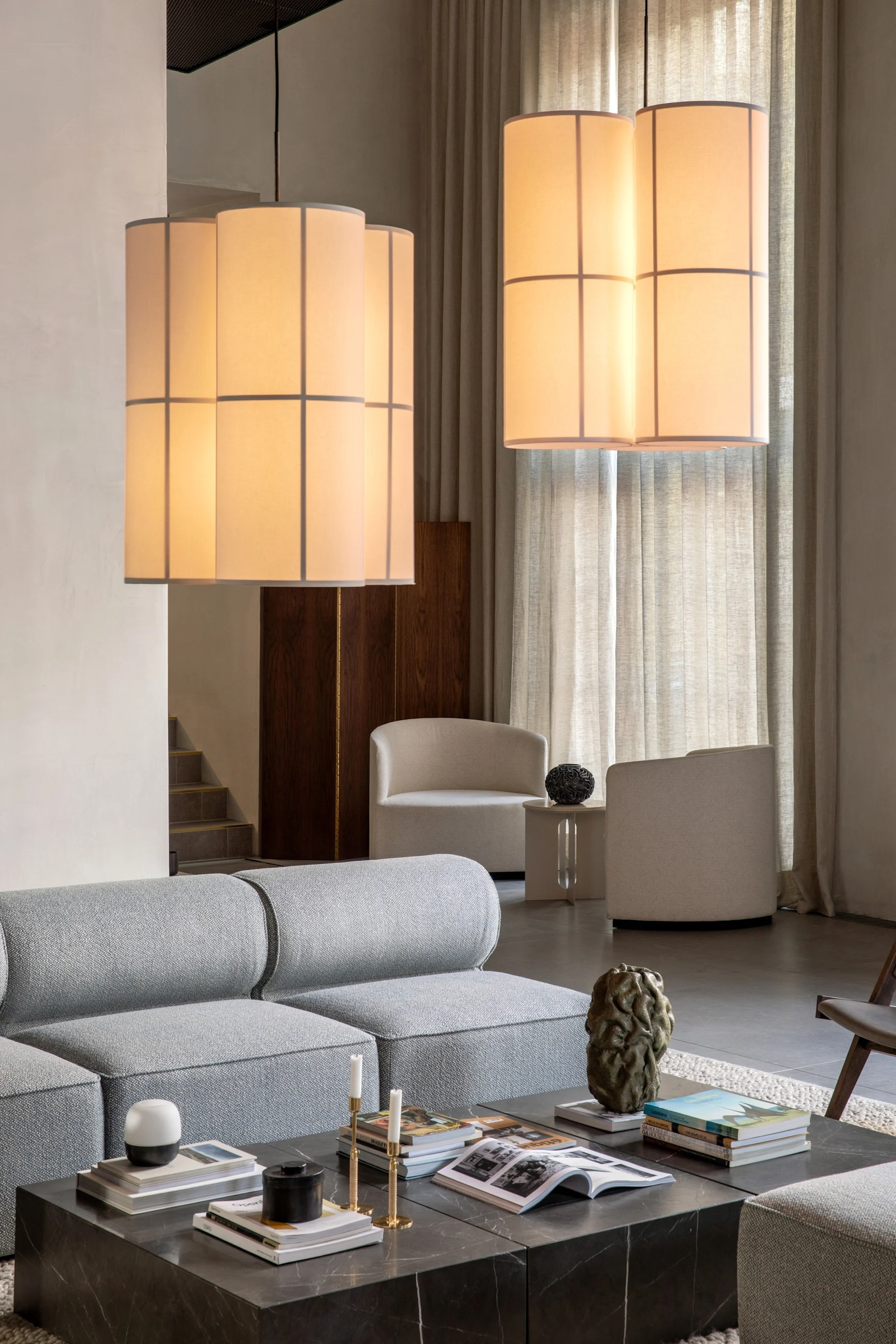
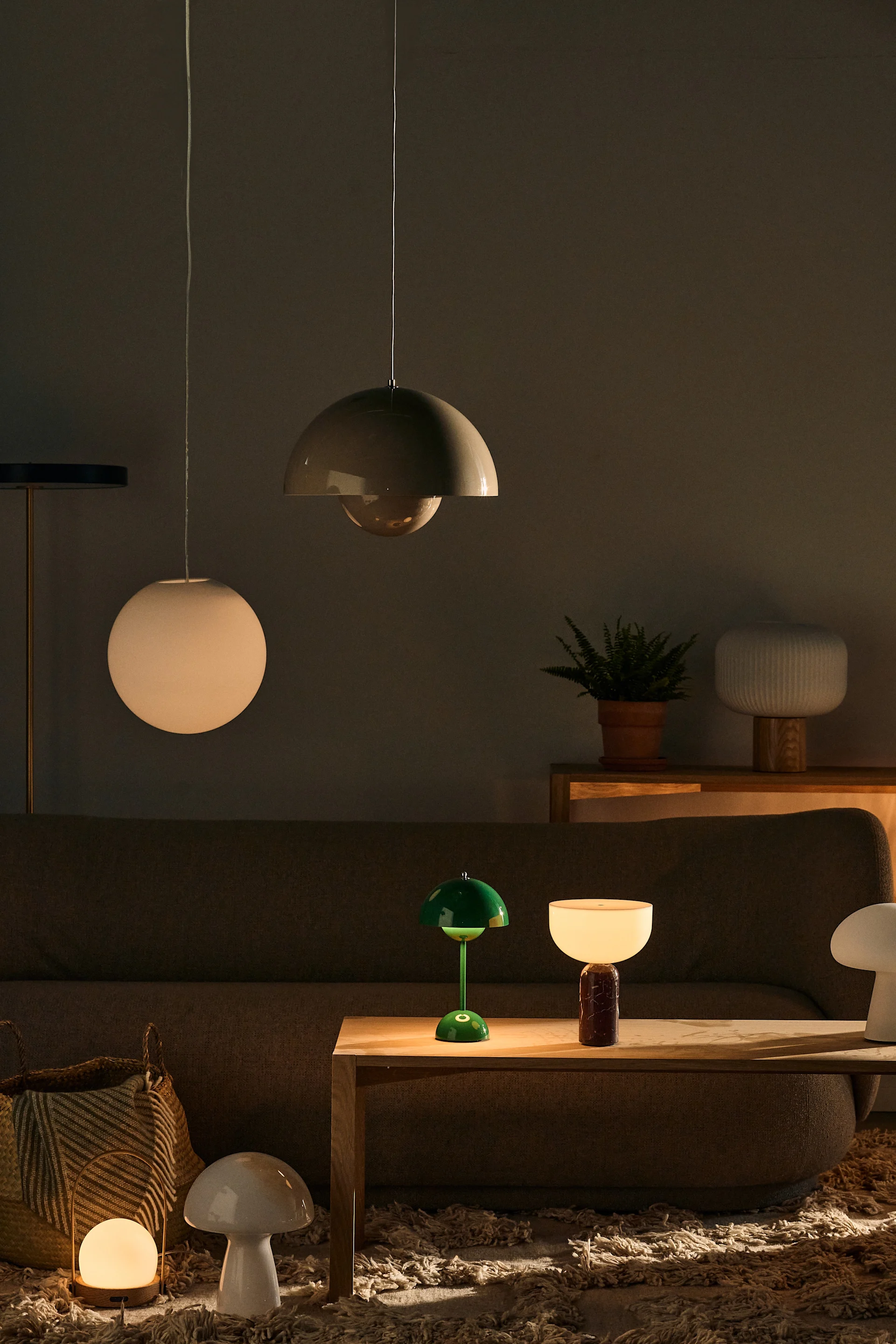
Give the ceiling light some friends! 10-15 light points in a room is a good rule of thumb.
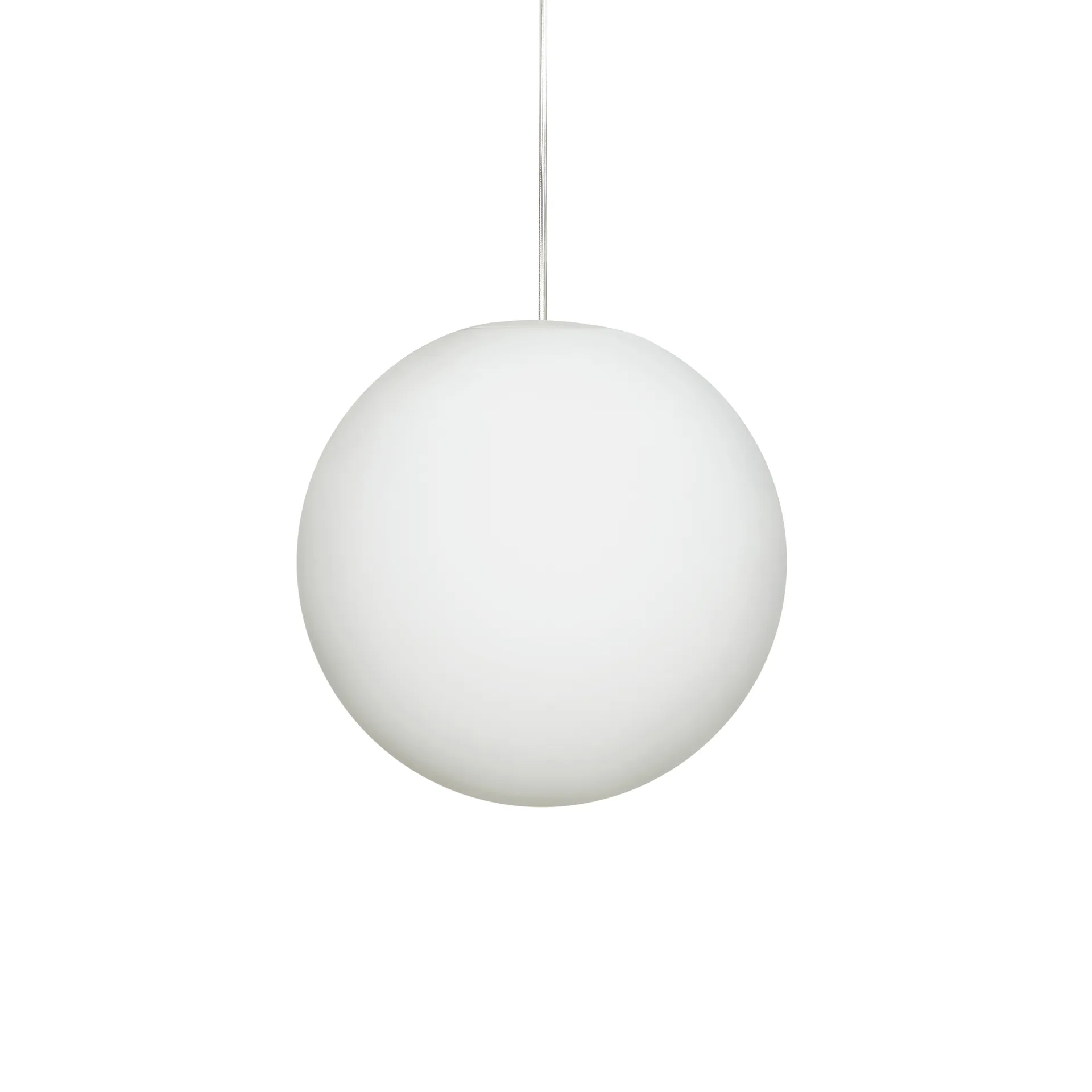
4. Choosing the right light bulb: The right temperature for a light bulb is crucial for how both the lamp and the room are actually perceived. Both the lumen and kelvin affect the look of the light and the feeling in your room, but what are these and how do you choose? Do you want a warmer light which is more subtle or something cooler and stronger? With our guide to choosing the right light bulb, you'll find plenty of tips to help you illuminate your living room. Read more: How to choose the right light bulb
5. Choose a dimmable ceiling light: Being able to adjust the brightness is both practical and useful when you want to create different moods in the room. A ceiling light for the living room often serves as general light, which means that it is light that is needed to socialise and be active in a room, illuminating the entire or larger areas of the room. So being able to adjust from maximum strength to a more subtle light is preferable.
6. Complement the ceiling light: The ceiling light will do much of the heavy lifting in the living room when it comes to illumination, but it is equally important to provide the living room with other light points as a ceiling light alone will rarely fulfil all the needs of a room in terms of light. A living room can easily be decorated with between 10-15 light points to create harmony, atmosphere but also to fulfil functional needs, such as reading light. Give your living room ceiling light some friends, it will make all the difference in the room!
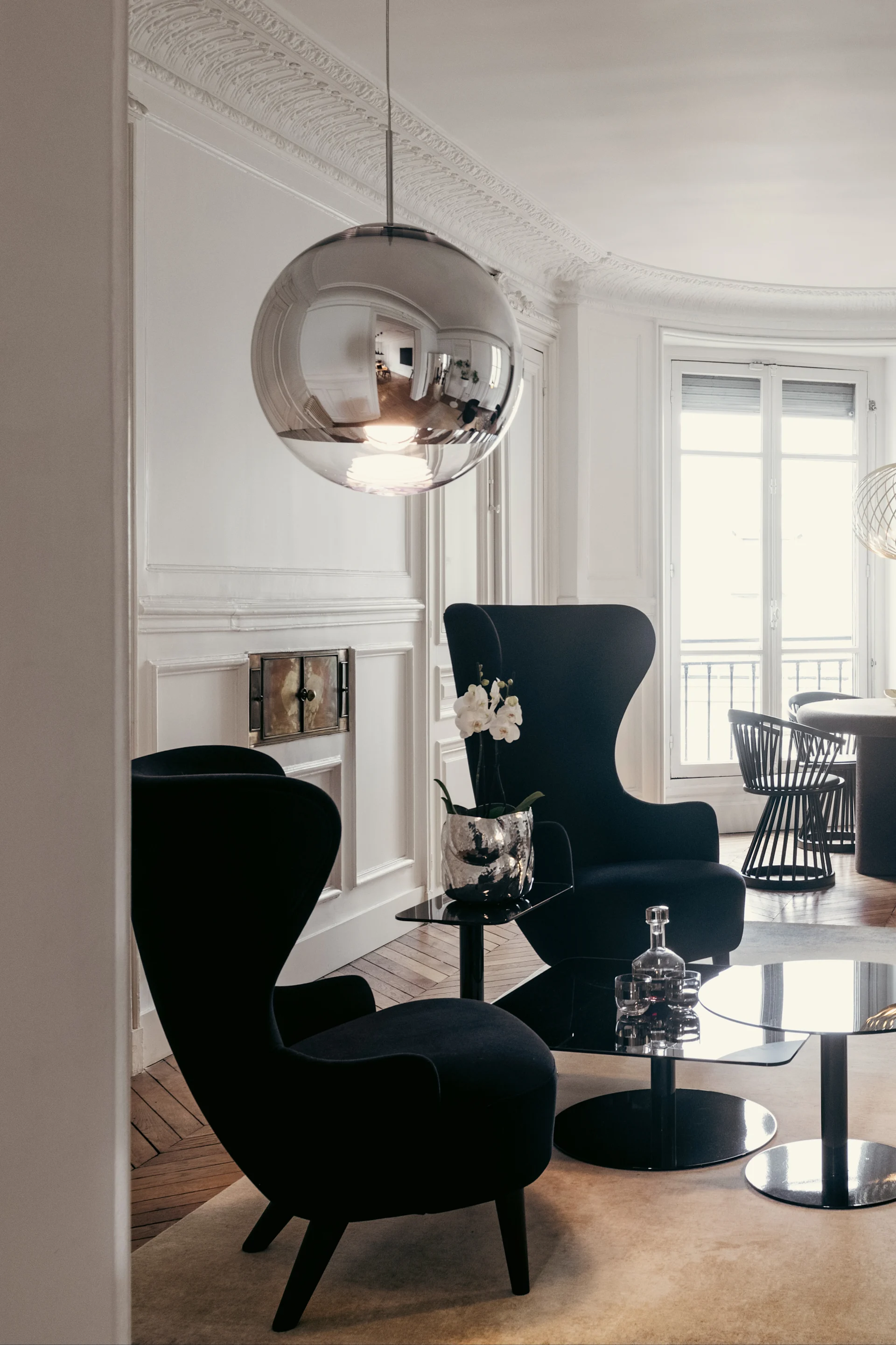
7. Style, colour & shape: Of course, an important part of choosing the right ceiling light for your living room is finding a candidate that qualifies in terms of style, colour and shape. Do you want something modern, classic, colourful or muted? Keep in mind that the ceiling light is a central part of the living room, so it's important that it harmonises with your furniture and style choices. The important thing here is to try to combine the practical with the visual, then it will be at its best.
Modern ceiling lights for the living room
Clear lines, minimalist shapes and well-thought-out details characterise the appearance of modern lights and make them an integral part of any contemporary living concept.
A key feature of modern ceiling lights is their versatility. Many models can be dimmed or combined with different light sources, allowing the lighting mood to be flexibly adapted to the time of day and use. Issues such as energy efficiency and long-lasting LED technology also play an important role and help to combine modern design with everyday practicality.
In addition, modern ceiling lights are often characterised by innovative materials and surfaces – from metal and glass to textile or natural elements. Neutral tones such as white, black or beige often dominate in terms of colour, blending harmoniously into various interior design styles. At the same time, deliberately chosen contrasts or unusual shapes can add a stylish accent.
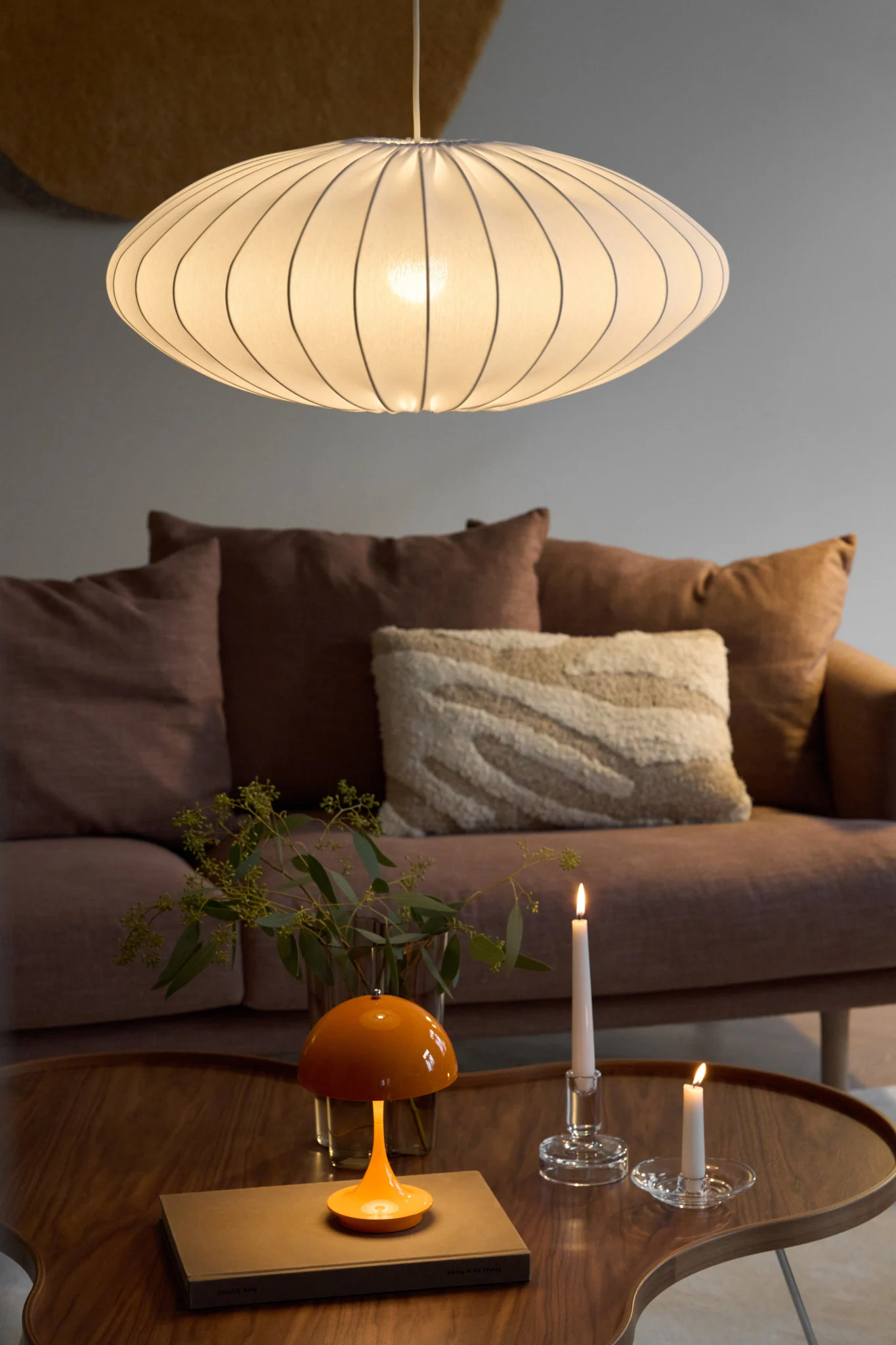
Paper lamps for the living room
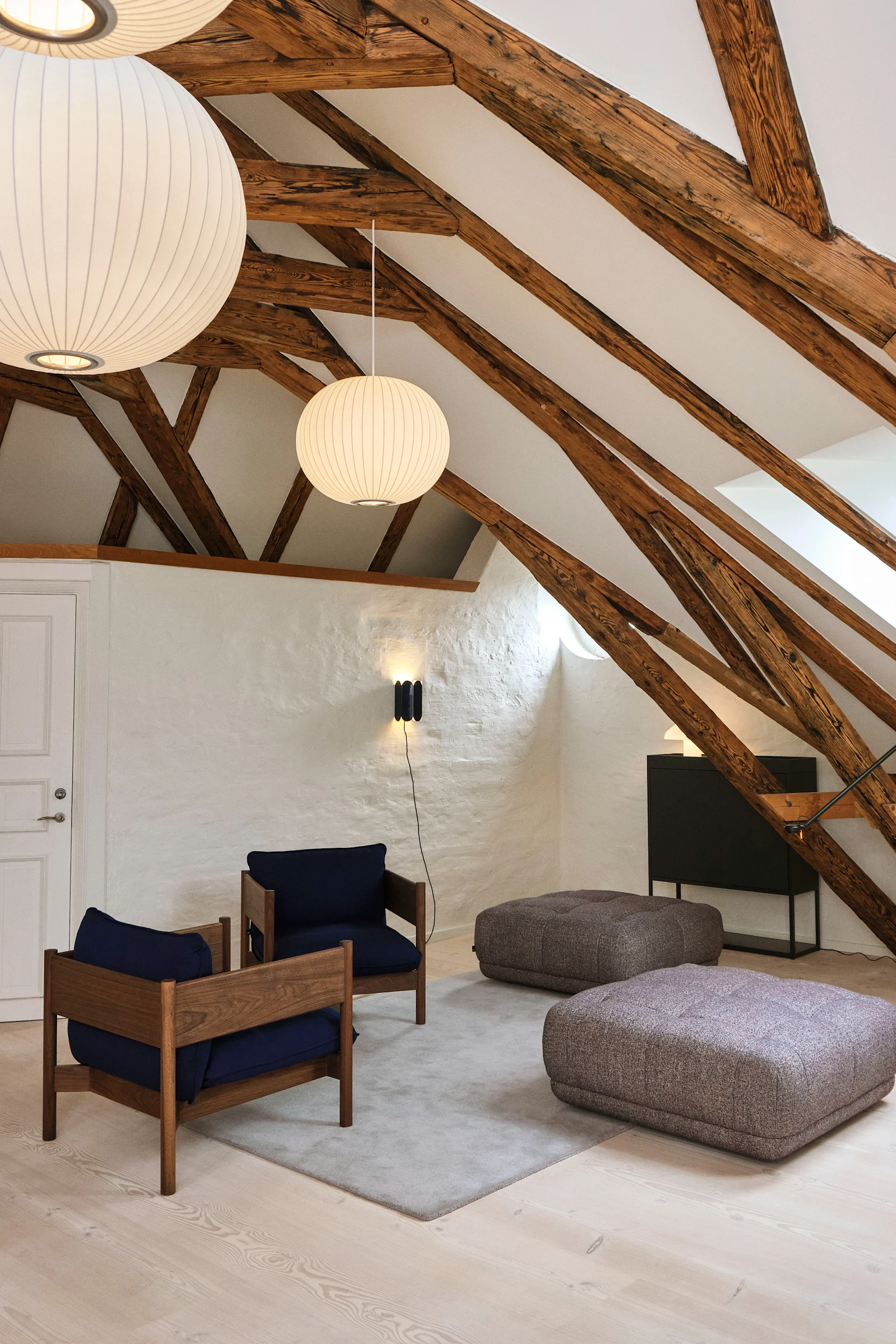
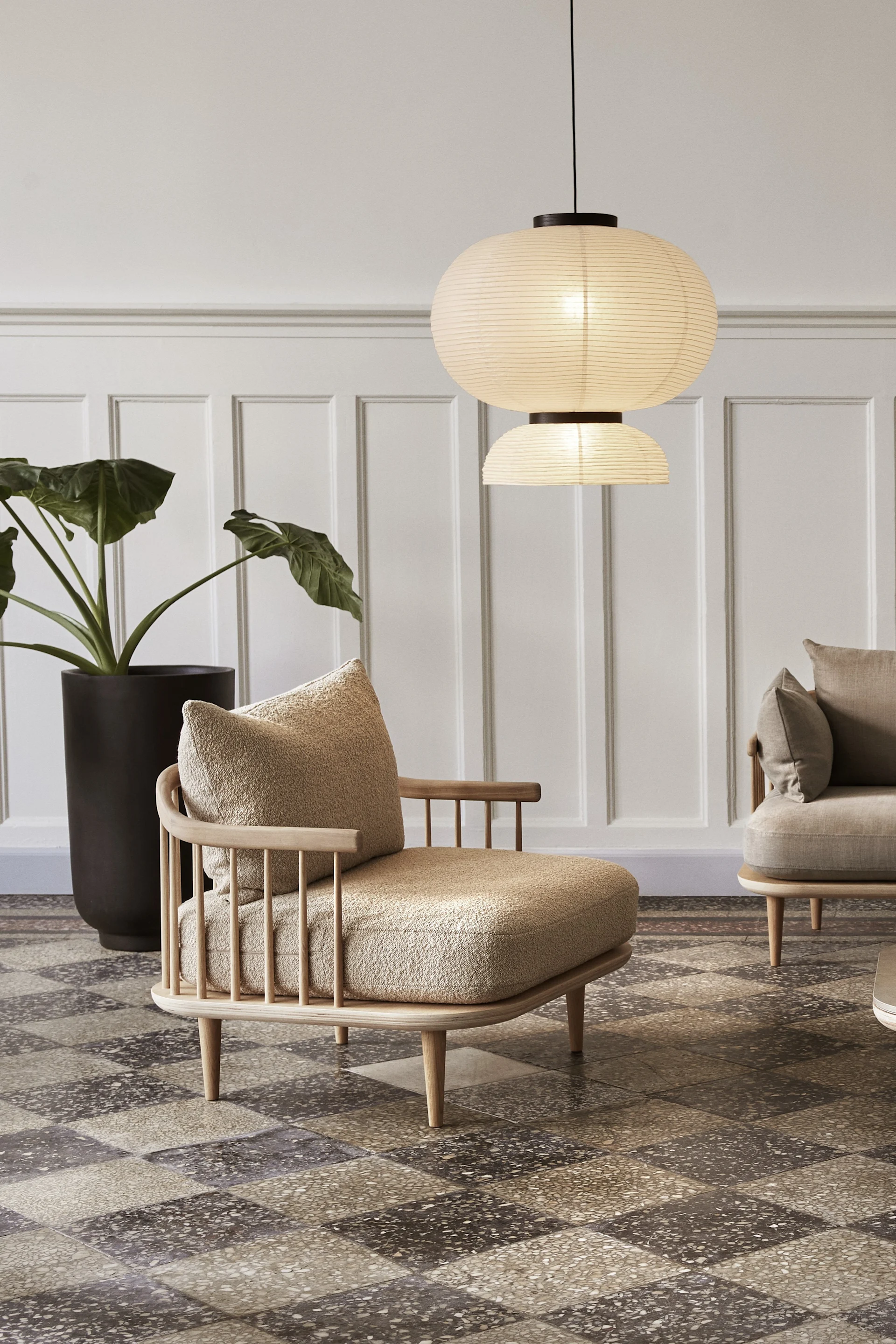
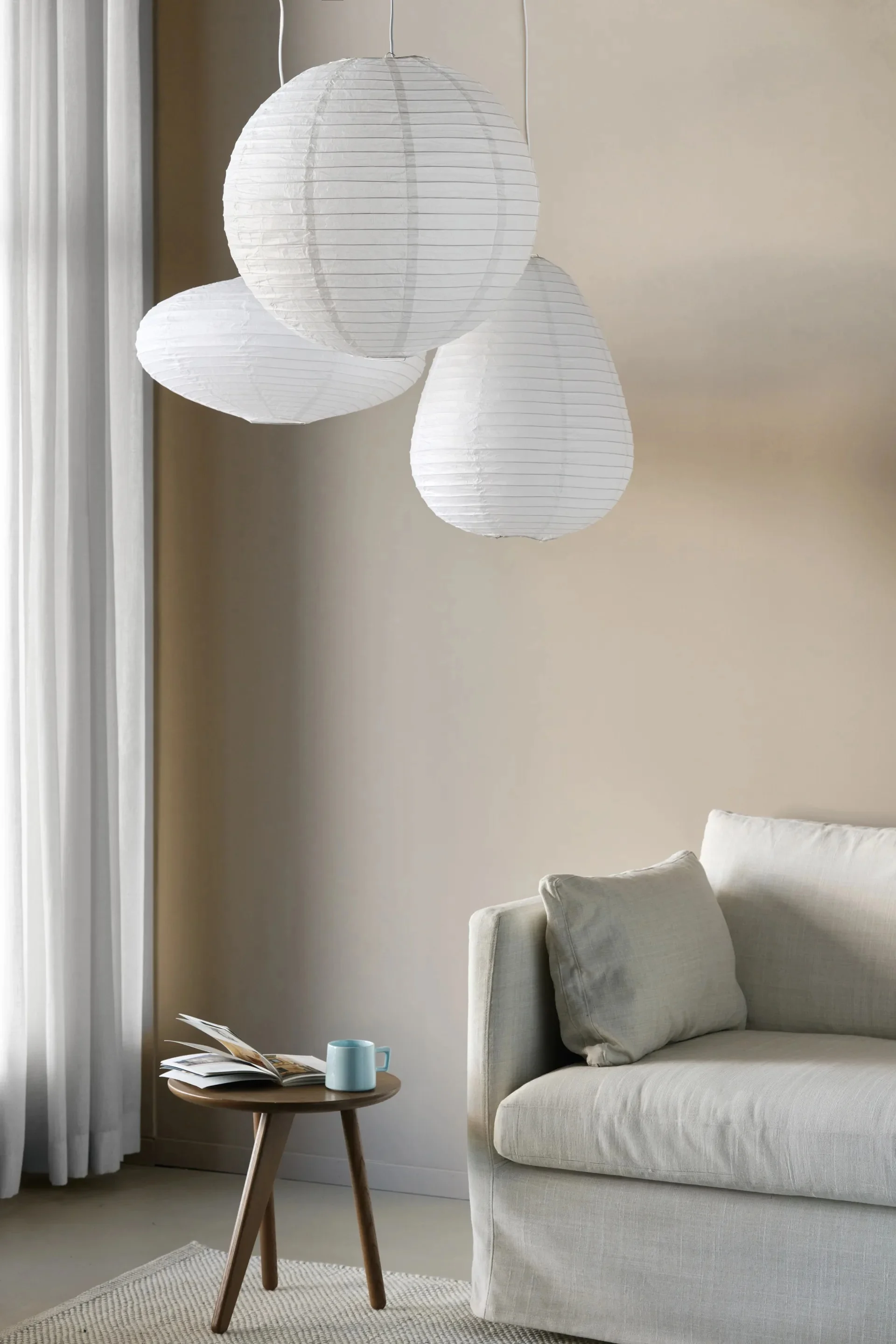
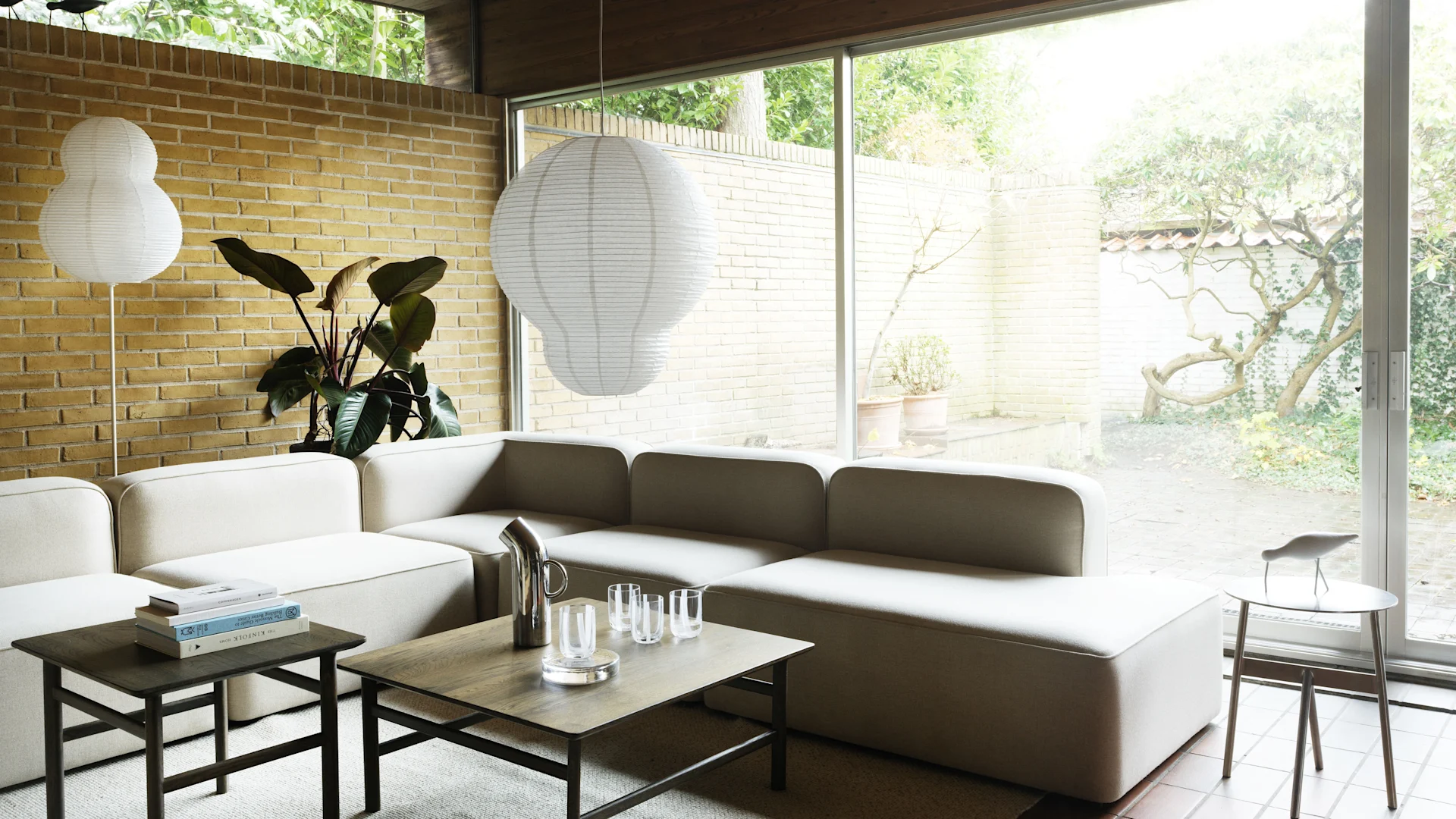
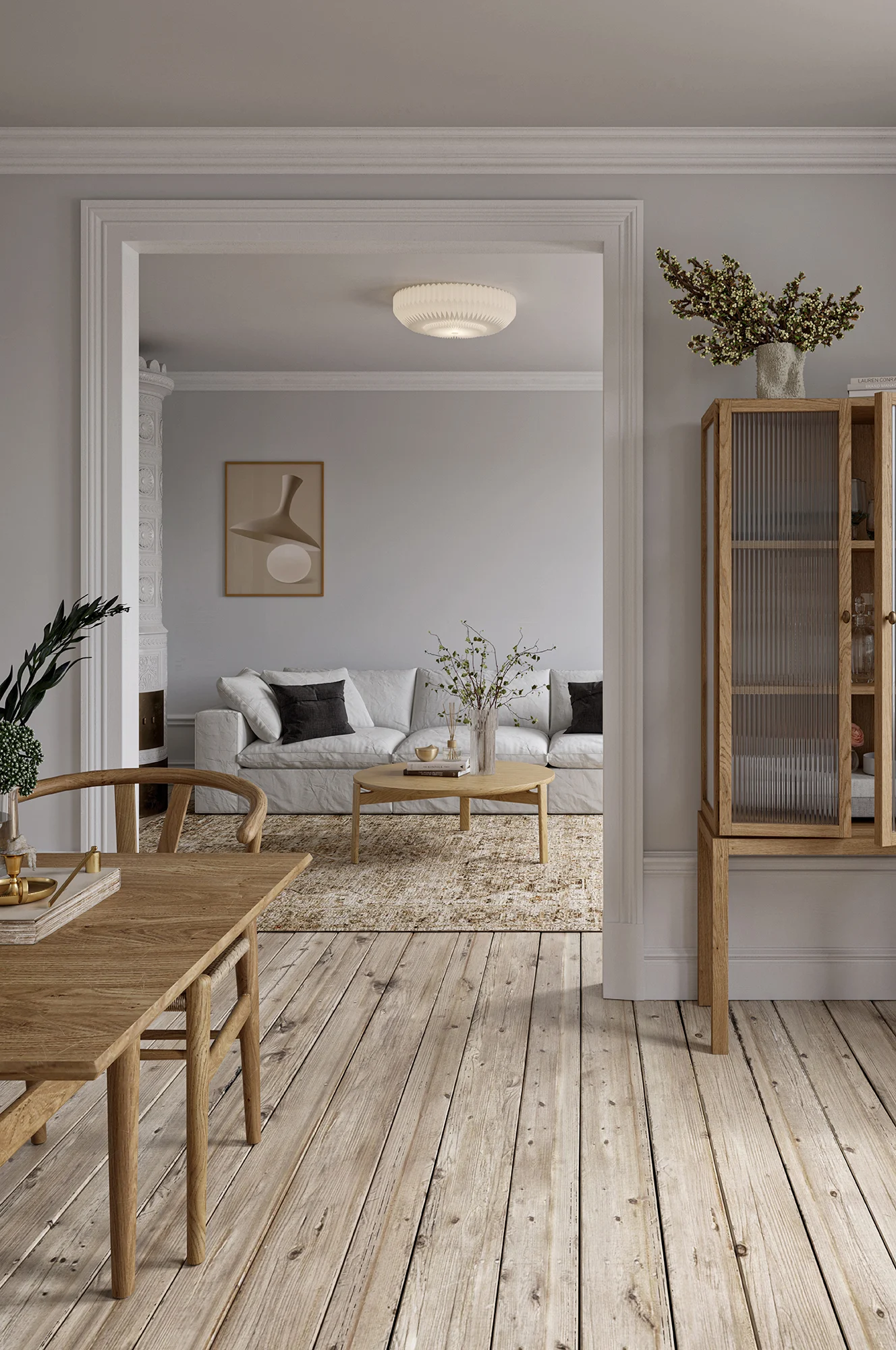
Paper lampshades are currently among the most popular ceiling lights for living rooms. Their success lies in the combination of lightness, timeless design and pleasant lighting. The paper gently filters the light and provides uniform, glare-free illumination that creates a particularly cosy atmosphere.
Paper lights are ideal for Scandinavian, modern or minimalist living rooms, but can also be combined well with natural materials such as wood or linen. Depending on their size and shape, they can remain discreetly in the background or be used to make a deliberate statement. In larger rooms, several paper lights at different heights create a particularly harmonious effect.
It is important to consider the size of the lamp in relation to the room and the choice of light source: warm white light emphasises the soft effect of the paper and enhances the cosy atmosphere.
Paper lampshades go particularly well with the Japandi style, which you can learn more about here: The Japandi Style – How to combine Scandinavian and Japanese interior styles

Ceiling sconces for the living room
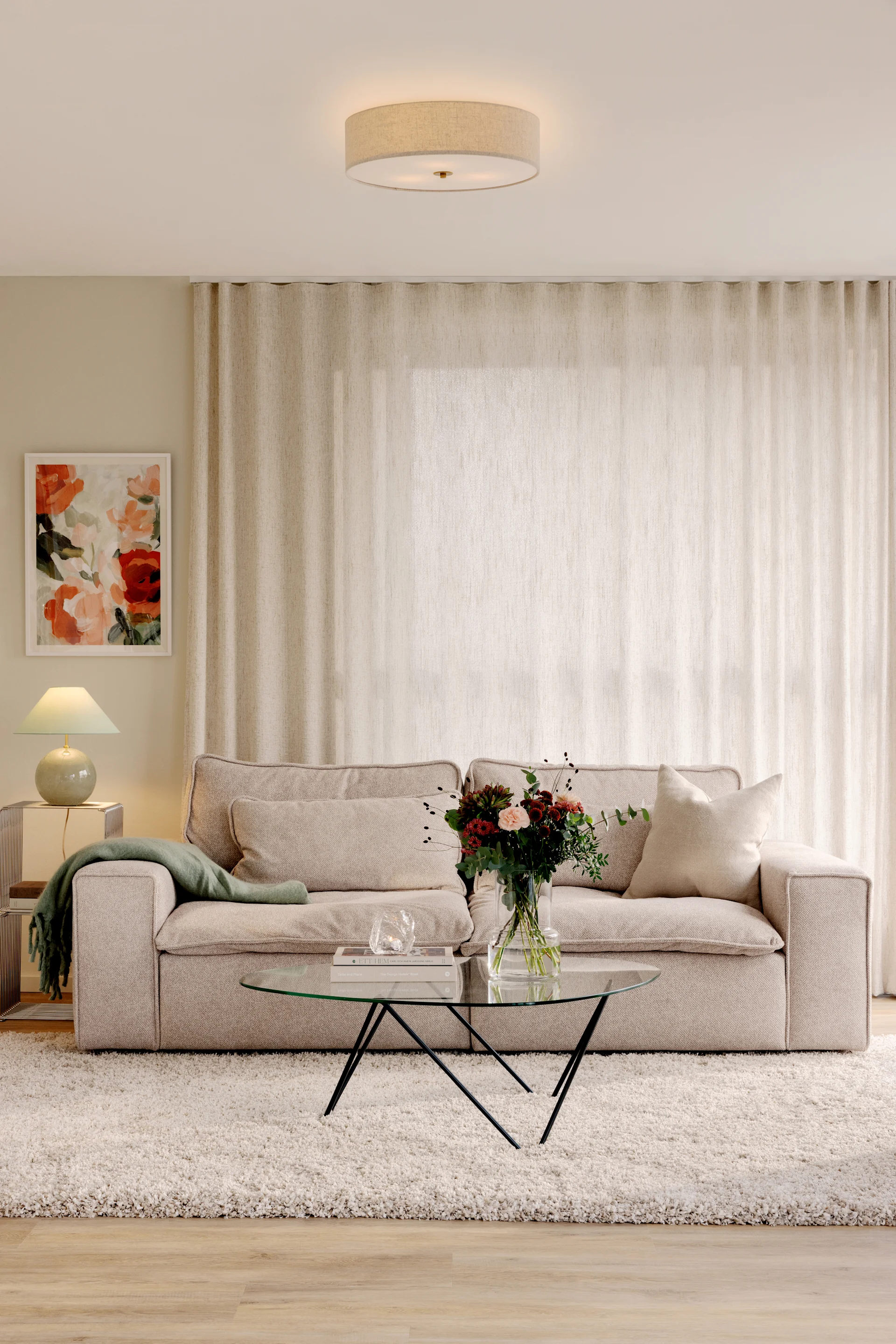
A classic ceiling sconce, which are mounted directly on the ceiling, is a practical solution for living rooms with low ceilings or for anyone who prefers subtle lighting. They take up little space, create a tidy look and provide uniform basic lighting.
Today, this type of ceiling light is anything but boring: from simple, modern models to versions with glass or fabric shades to decorative designs, there is a wide range to choose from. Classic ceiling lights are particularly suitable when several light sources are to be combined in a room, for example with floor or table lamps.
When making your selection, ensure that the light provides sufficient illumination without causing glare. Models with opal glass or integrated diffusers ensure a pleasantly soft light distribution.
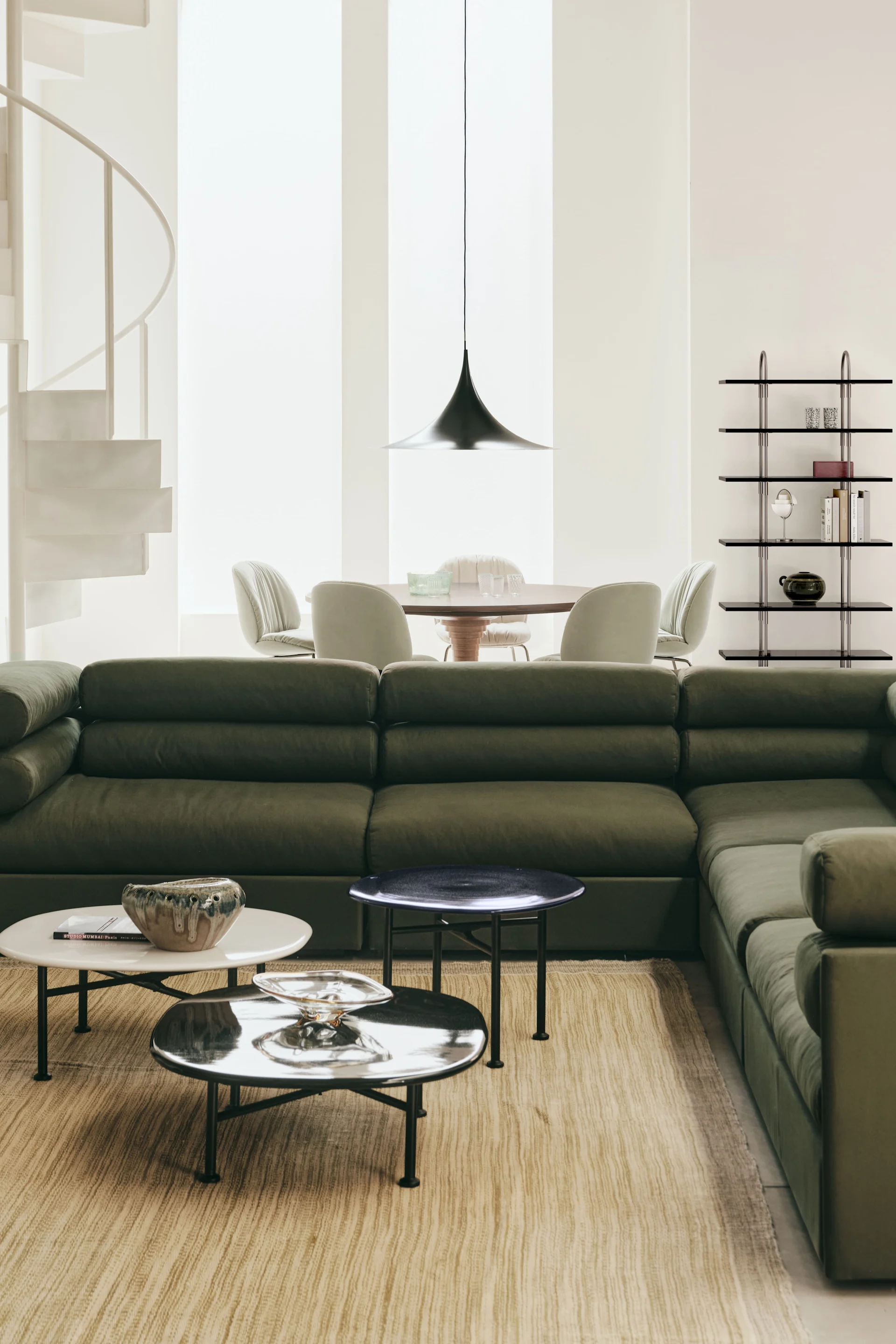
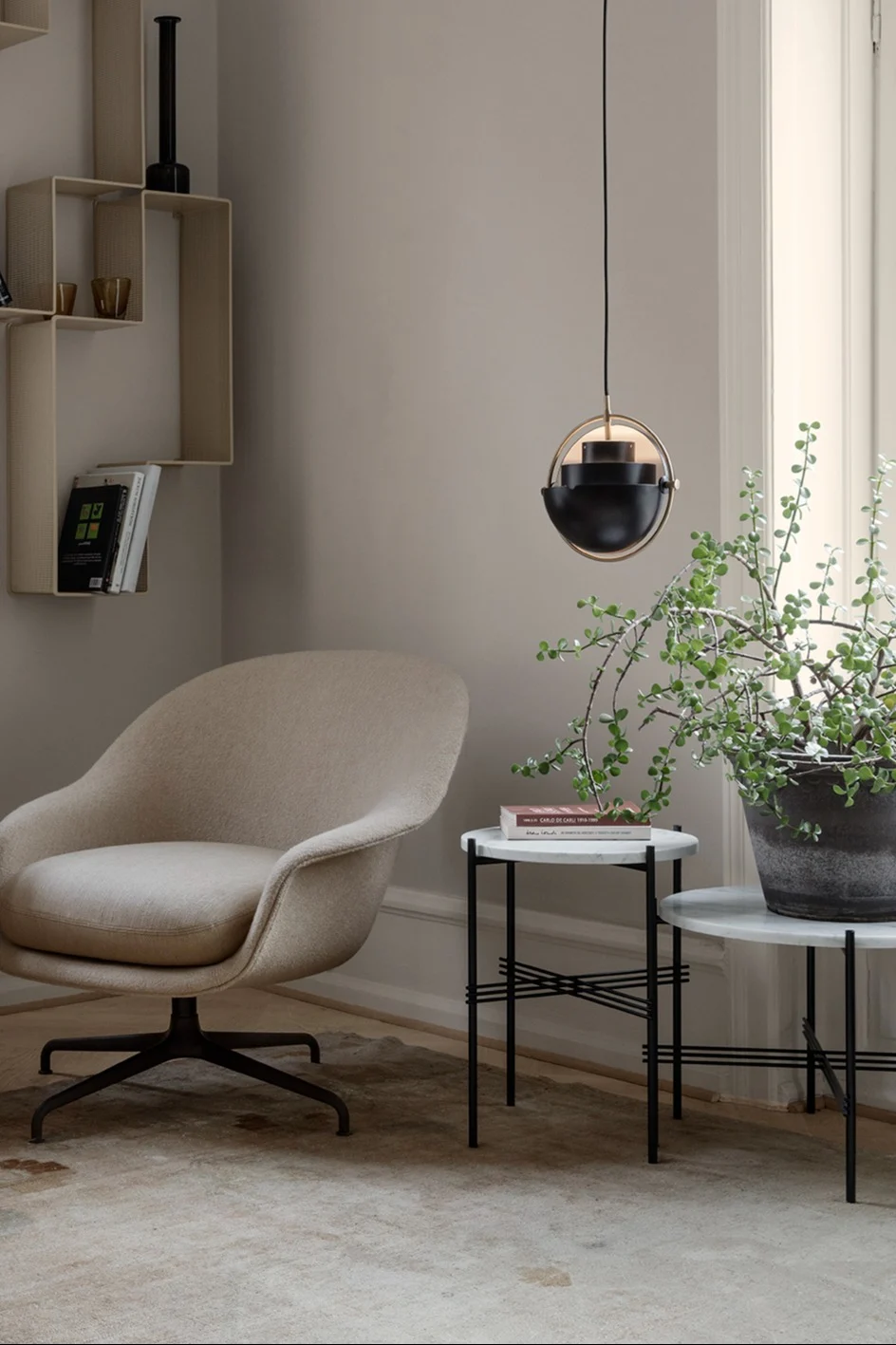
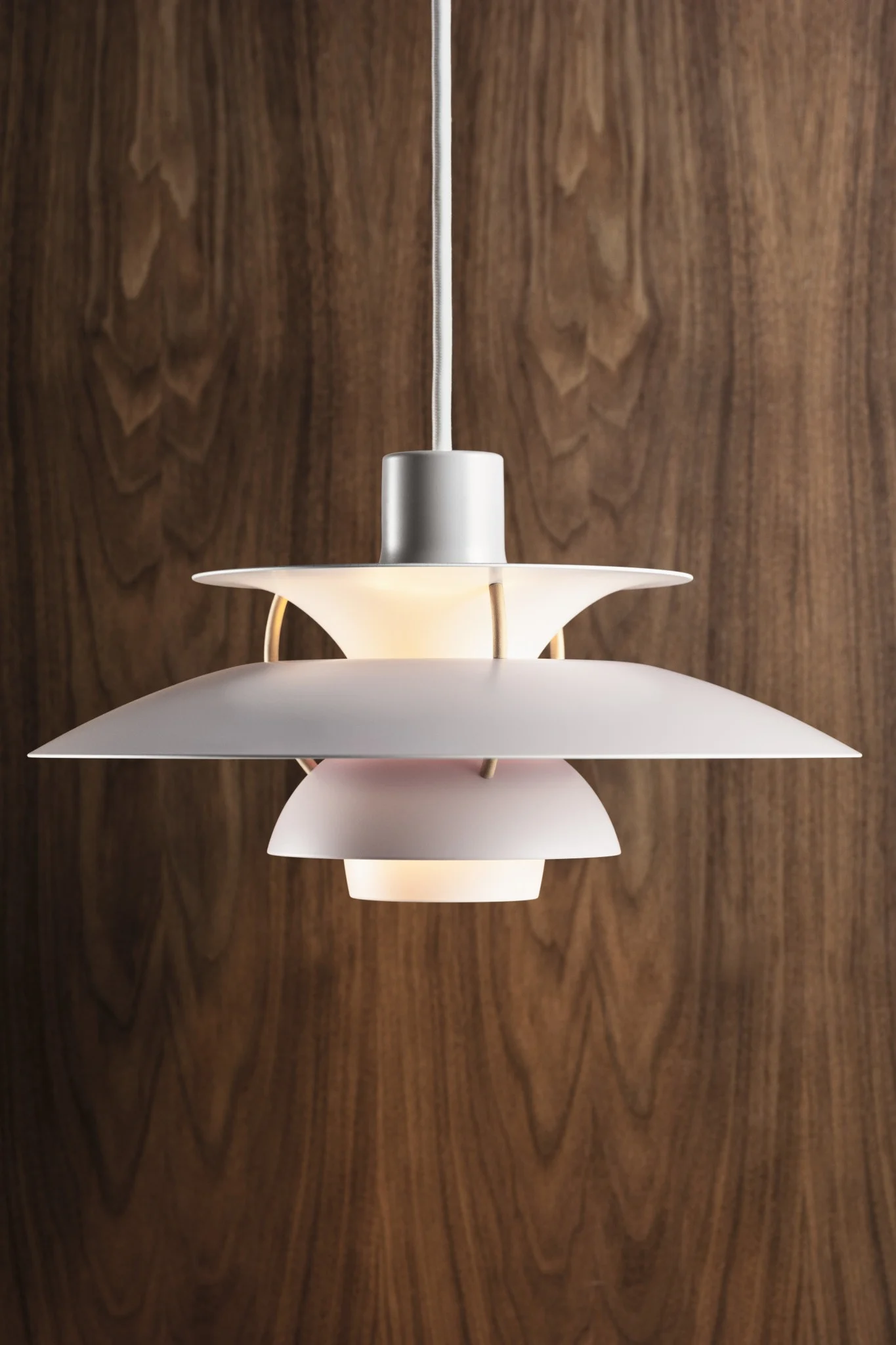
Scandinavian design classics for the living room
Design classics stand for their timeless design, high-quality materials and well-thought-out functionality. They are often the result of iconic designs and add stylistic accents to the living room.
Such a light is particularly suitable if it is to be used deliberately as an eye-catcher – for example, above the coffee table or in the middle of the room. Many design classics are available in different sizes and colours, allowing them to be flexibly adapted to different room concepts.
When choosing a design classic, it is worth paying attention to proportions and placement: in smaller living rooms, a model that is too large can quickly appear dominant, while spacious rooms benefit from a striking light.
Colourful & patterned ceiling lights
Colourful or patterned ceiling lights bring personality to the living room and are ideal for adding specific accents. They can serve as a contrast to otherwise neutral furnishings or pick up and reinforce existing colours in the room.
Such lights create a lively and individual effect, especially in modern or eclectic living styles. It is important to achieve a balanced overall look: if the ceiling light is striking, the rest of the furnishings should be more subdued.
The lighting effect also plays a role here – depending on the material and colour of the shade, the light can appear warmer or more intense. A dimmable function offers additional flexibility and allows the light to be adjusted to suit different moods.
Read here to find out which colours are on trend this year: Colour trends for 2026
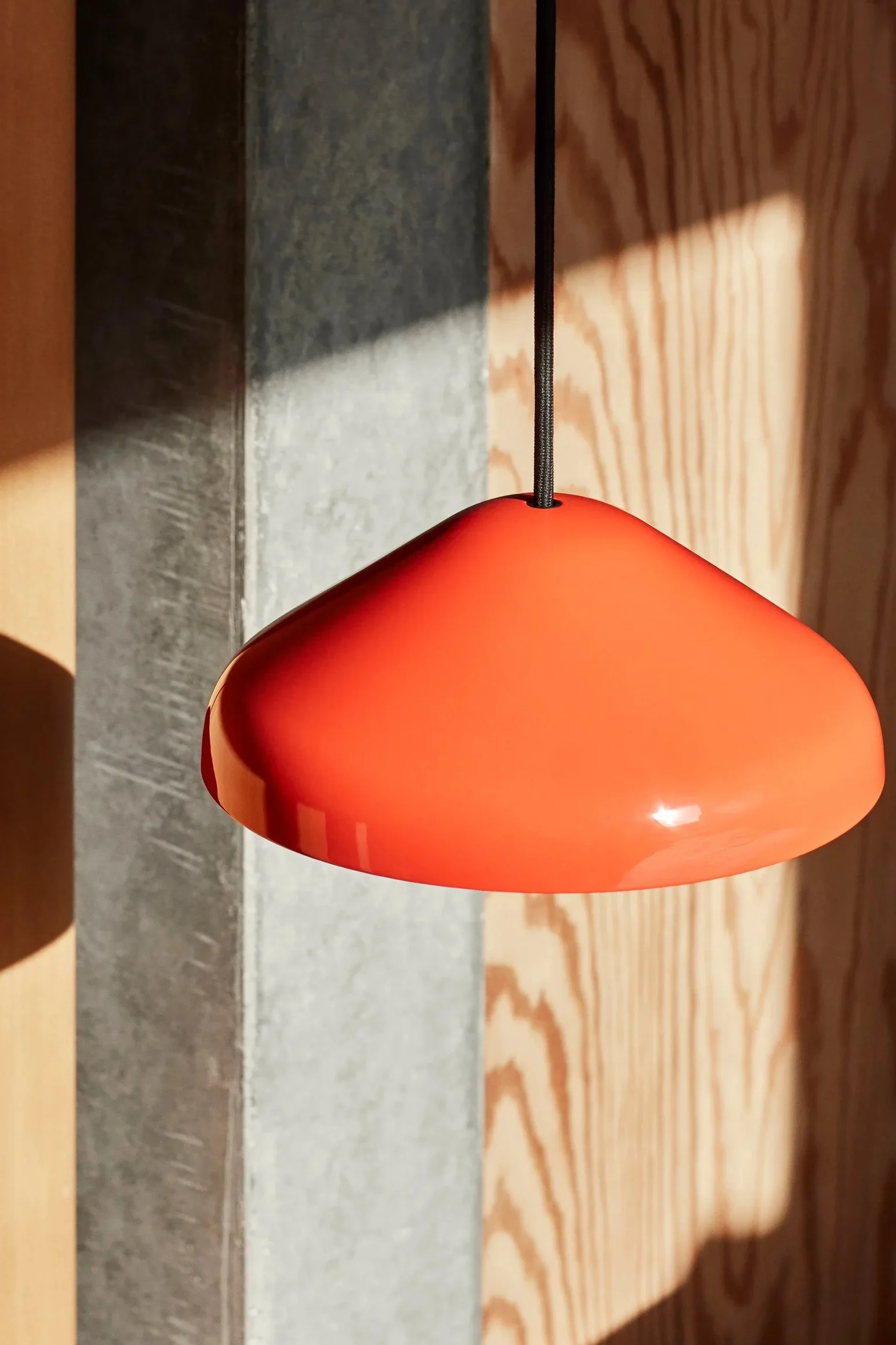
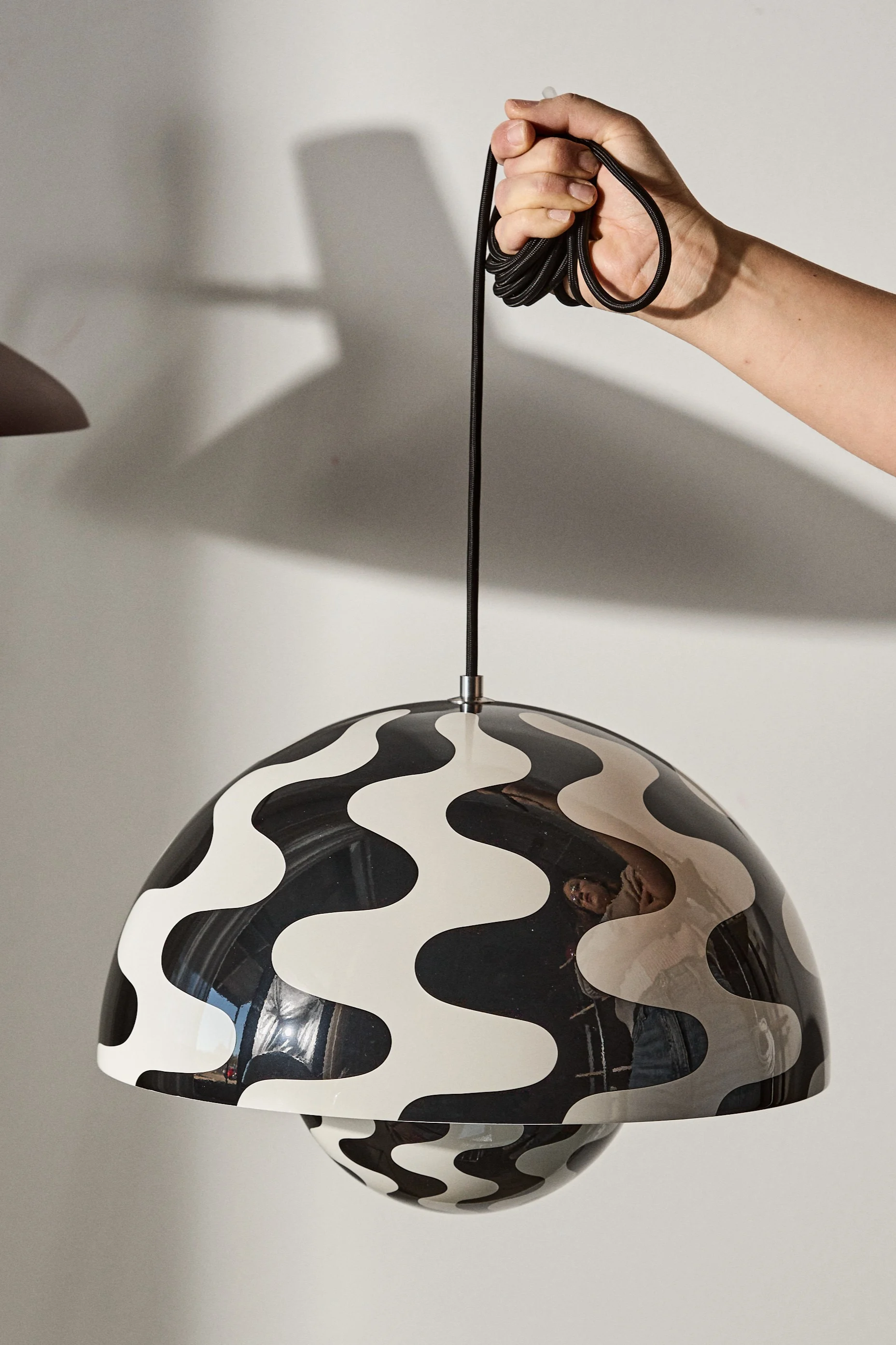
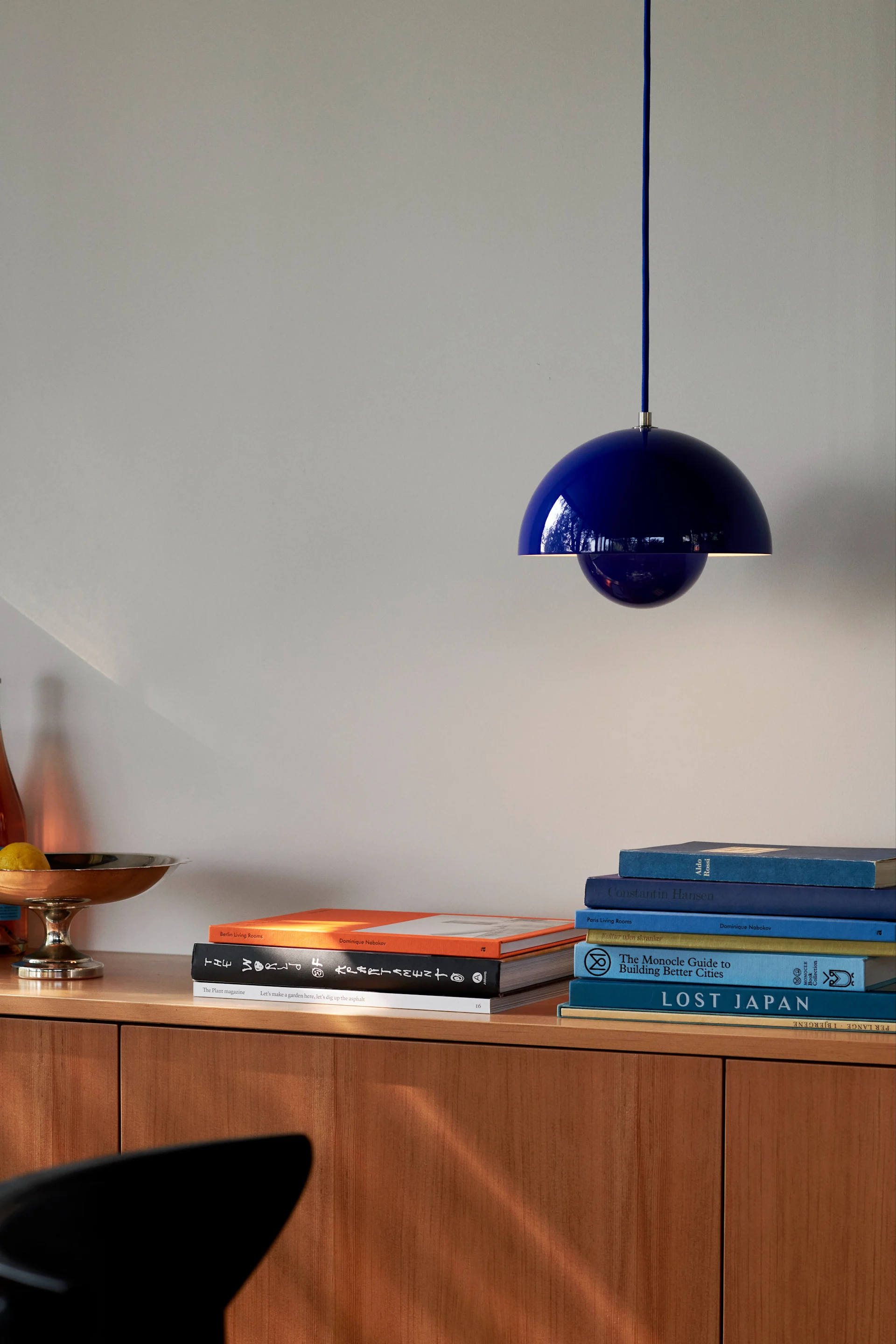
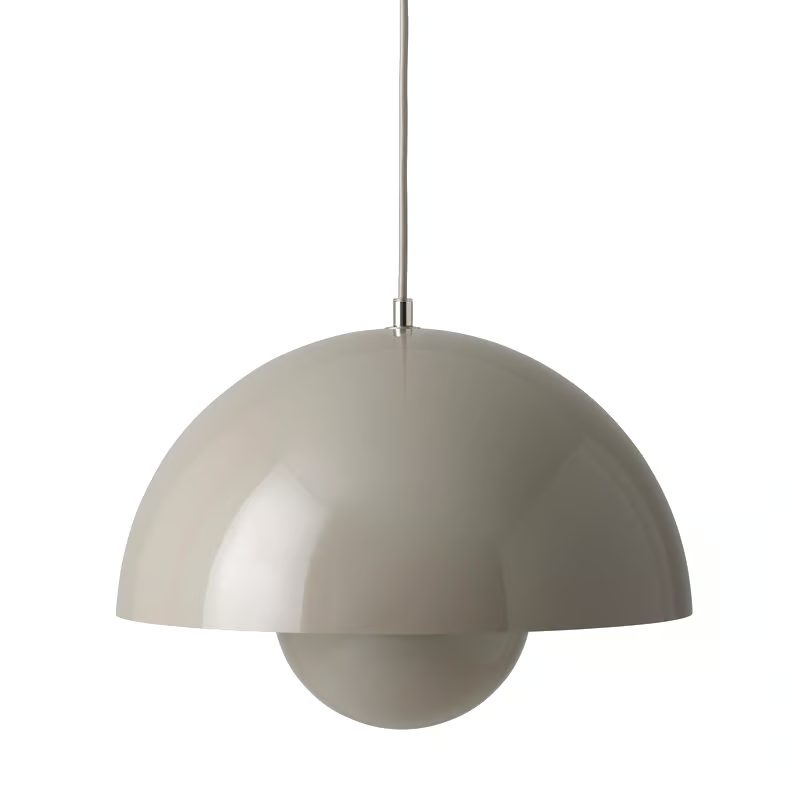
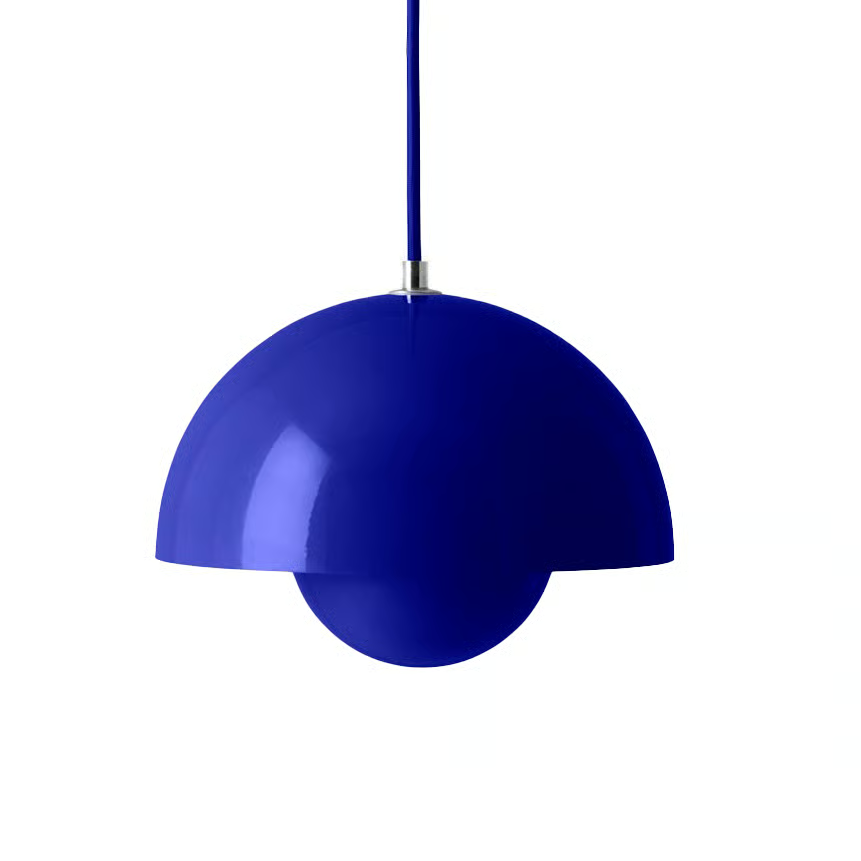
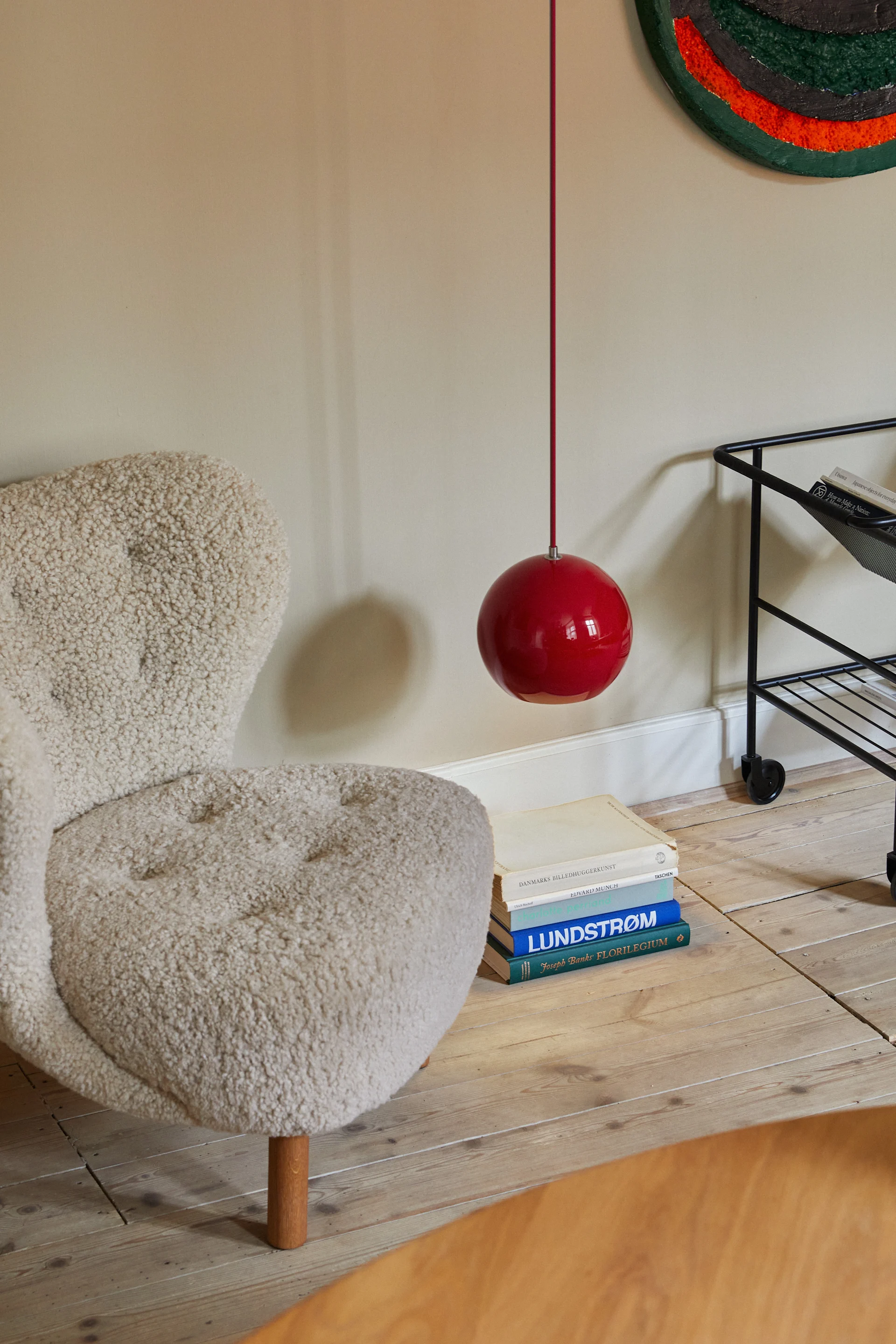
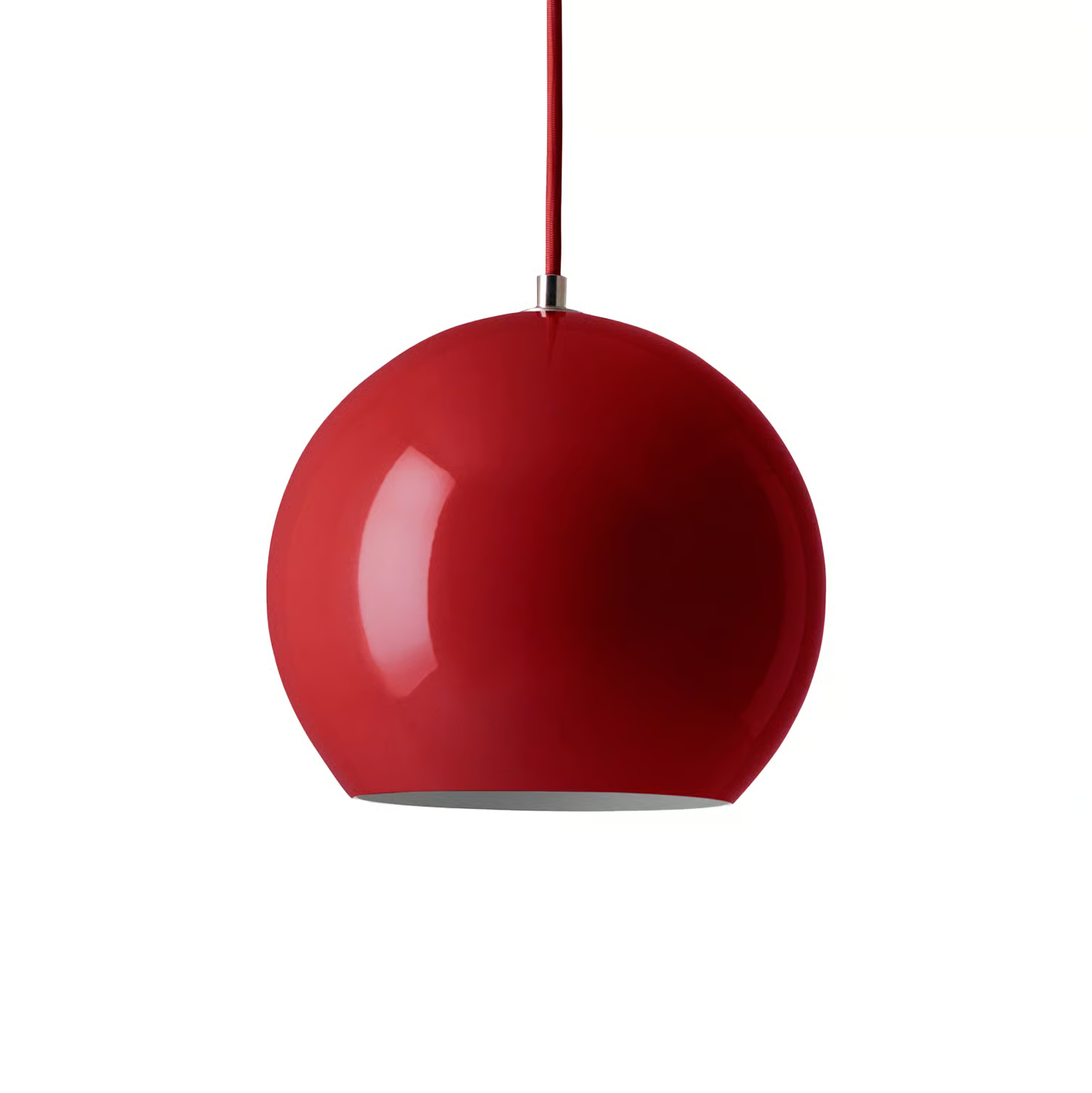
A classic in an unexpected place - Flowerpot VP1 from &Tradition
Natural Scandinavian ceiling lights for the living room
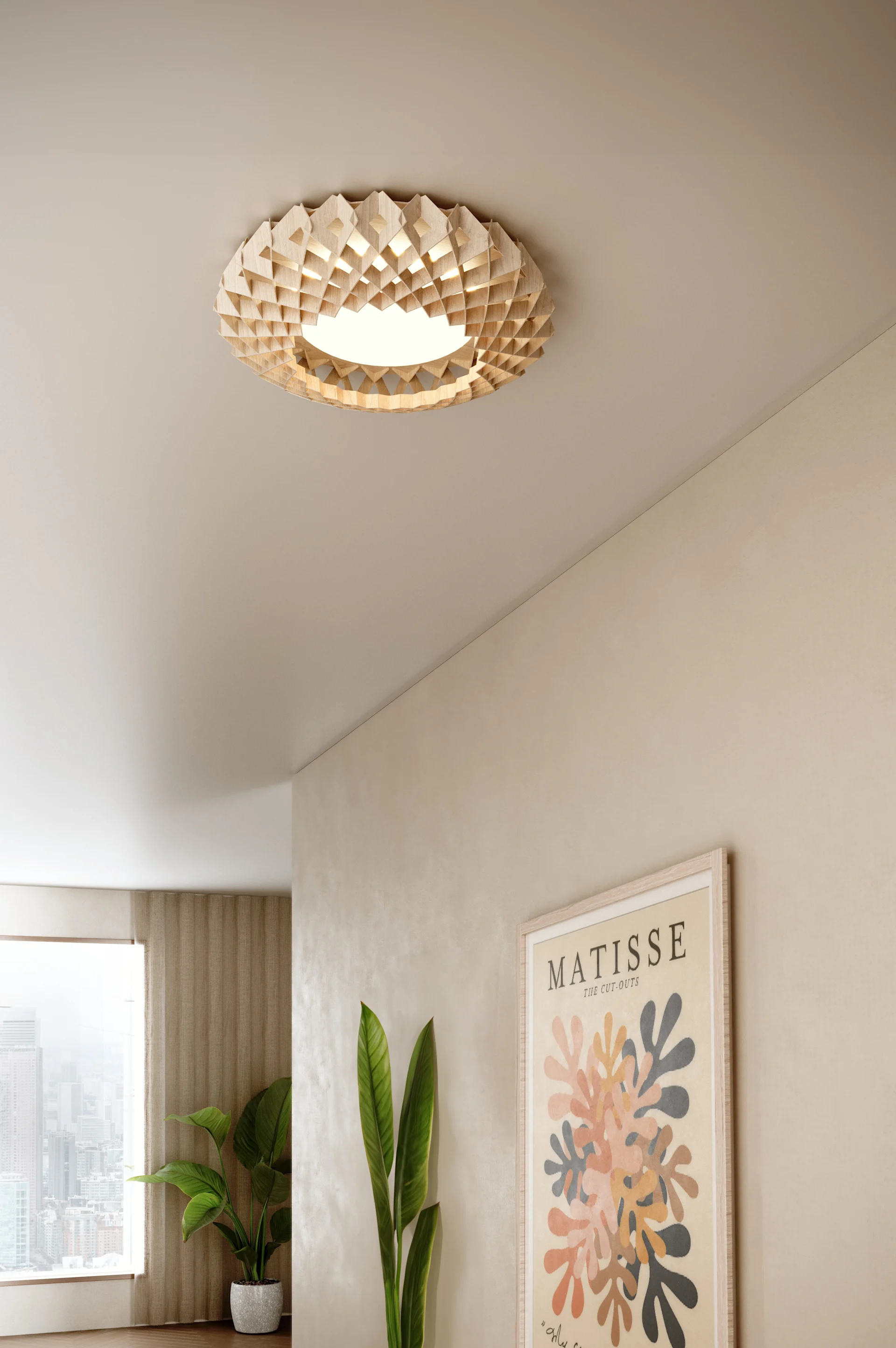
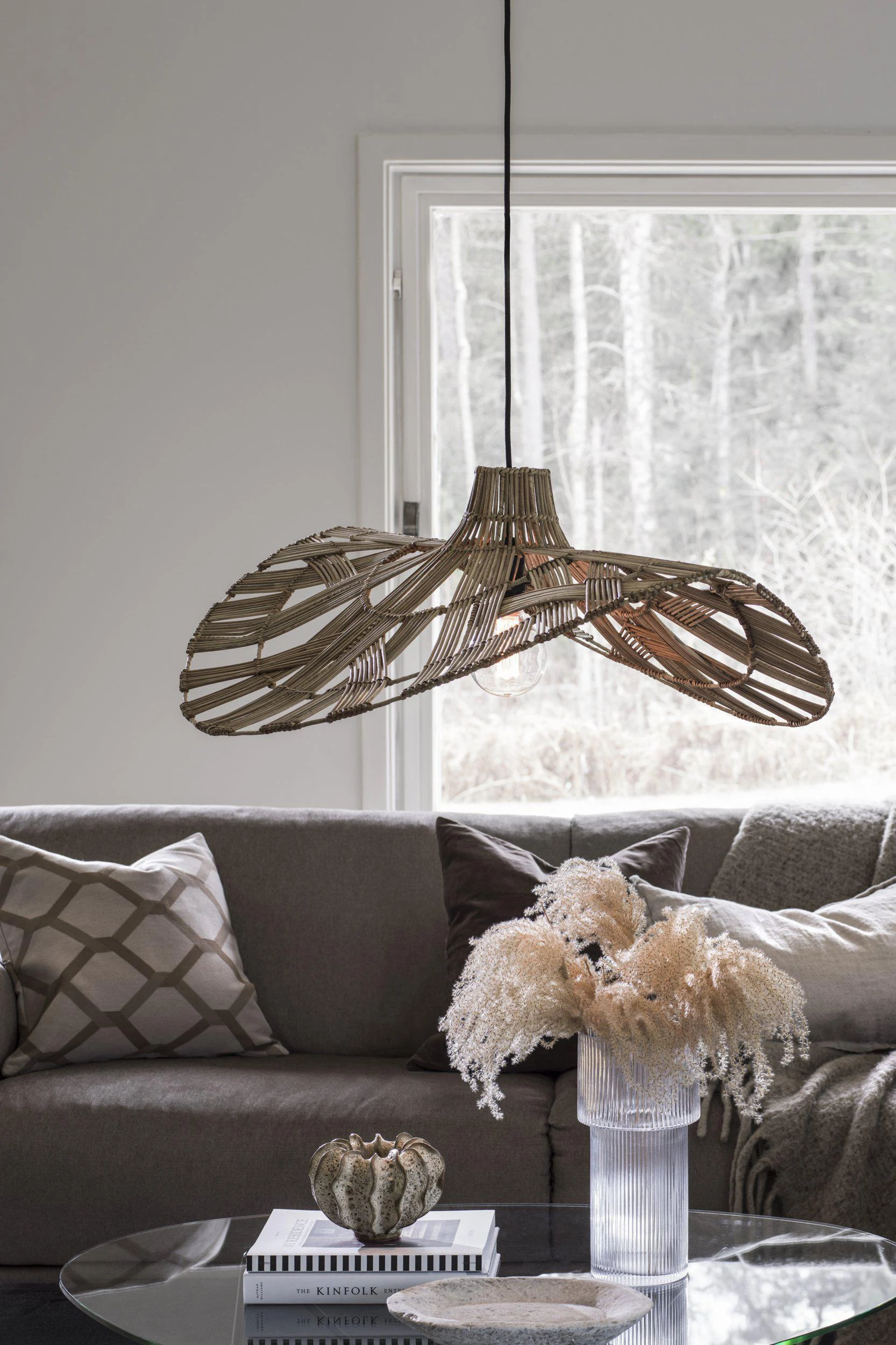
Natural Scandinavian ceiling lights represent tranquillity, timelessness and a close connection to nature. They incorporate typical elements of Scandinavian interior design and create a bright, welcoming and grounded atmosphere that is particularly well suited to the living room. The focus is on simple shapes, high-quality materials and a lighting effect that illuminates the room gently and evenly.
This style is characterised by natural materials such as wood, paper, linen, rattan and ceramics, which bring warmth and texture to the room. The colour palette is mostly understated, ranging from shades of white and beige to soft natural colours. This makes Scandinavian ceiling lights easy to combine with different interior styles and ensures they will remain contemporary for years to come.
Another feature of natural Scandinavian ceiling lights is their unobtrusive design. They do not push themselves into the foreground, but blend harmoniously into the overall picture and enhance the effect of the room. Especially in the living room, where cosiness plays a central role, this restraint creates a balanced and relaxed atmosphere.
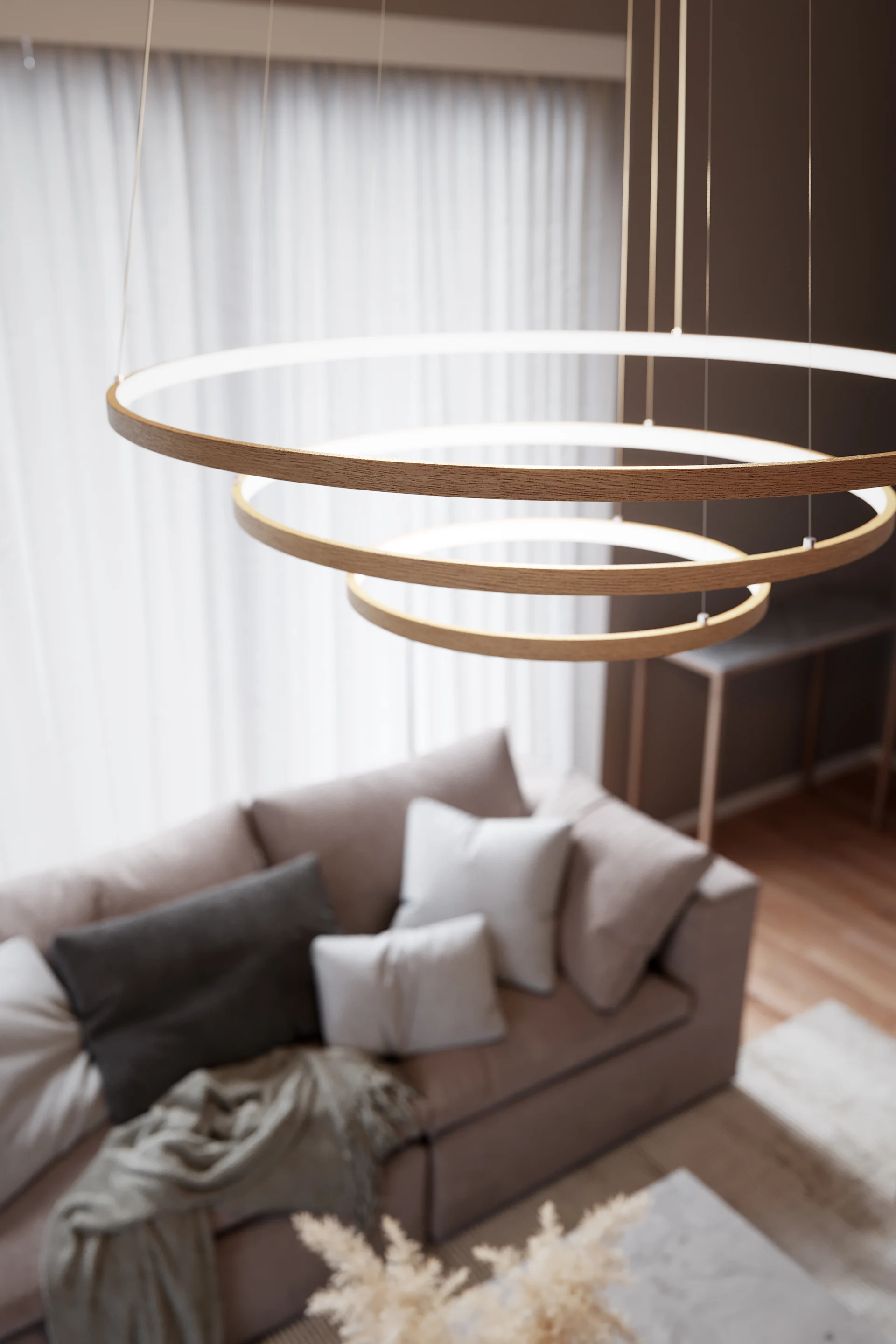
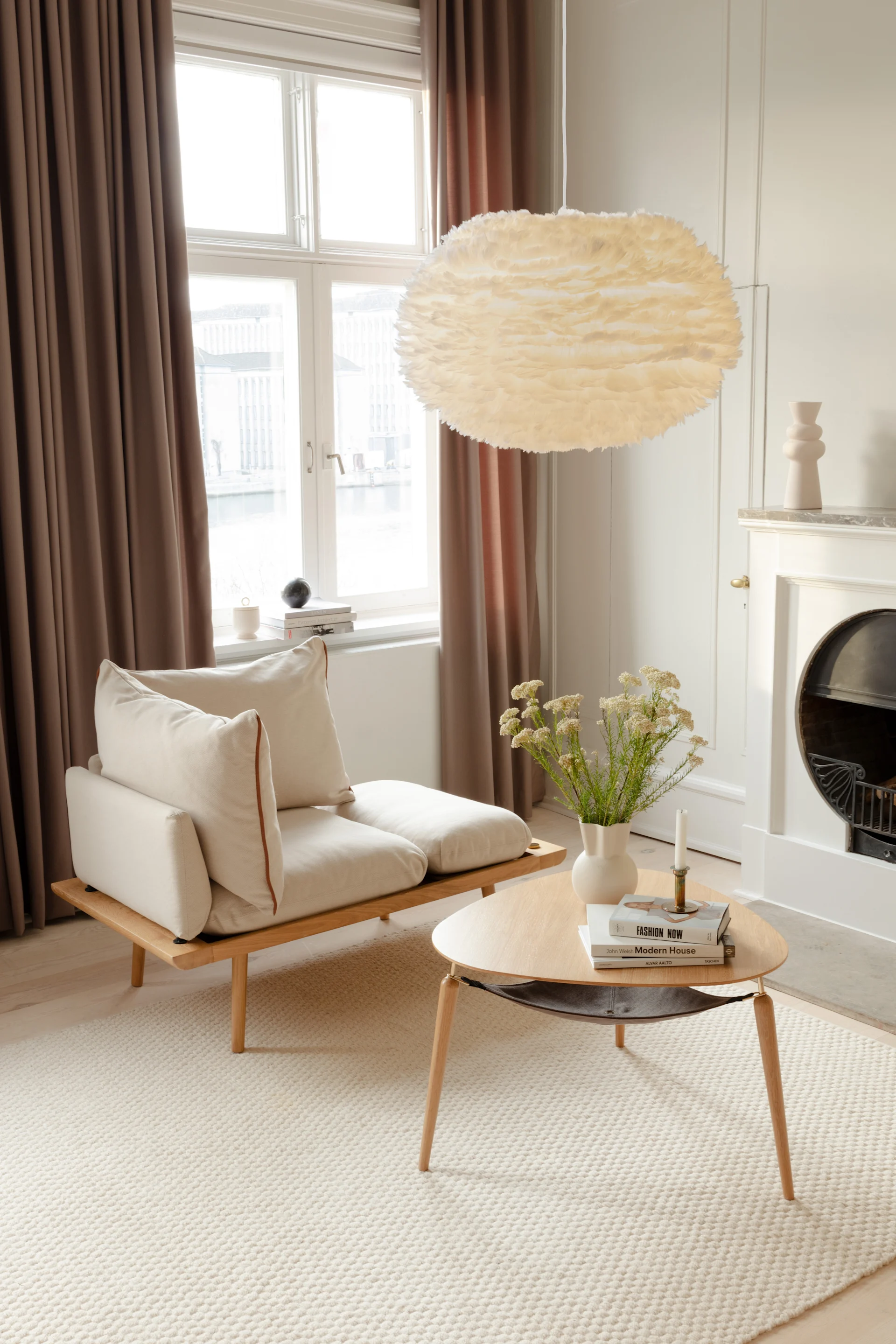
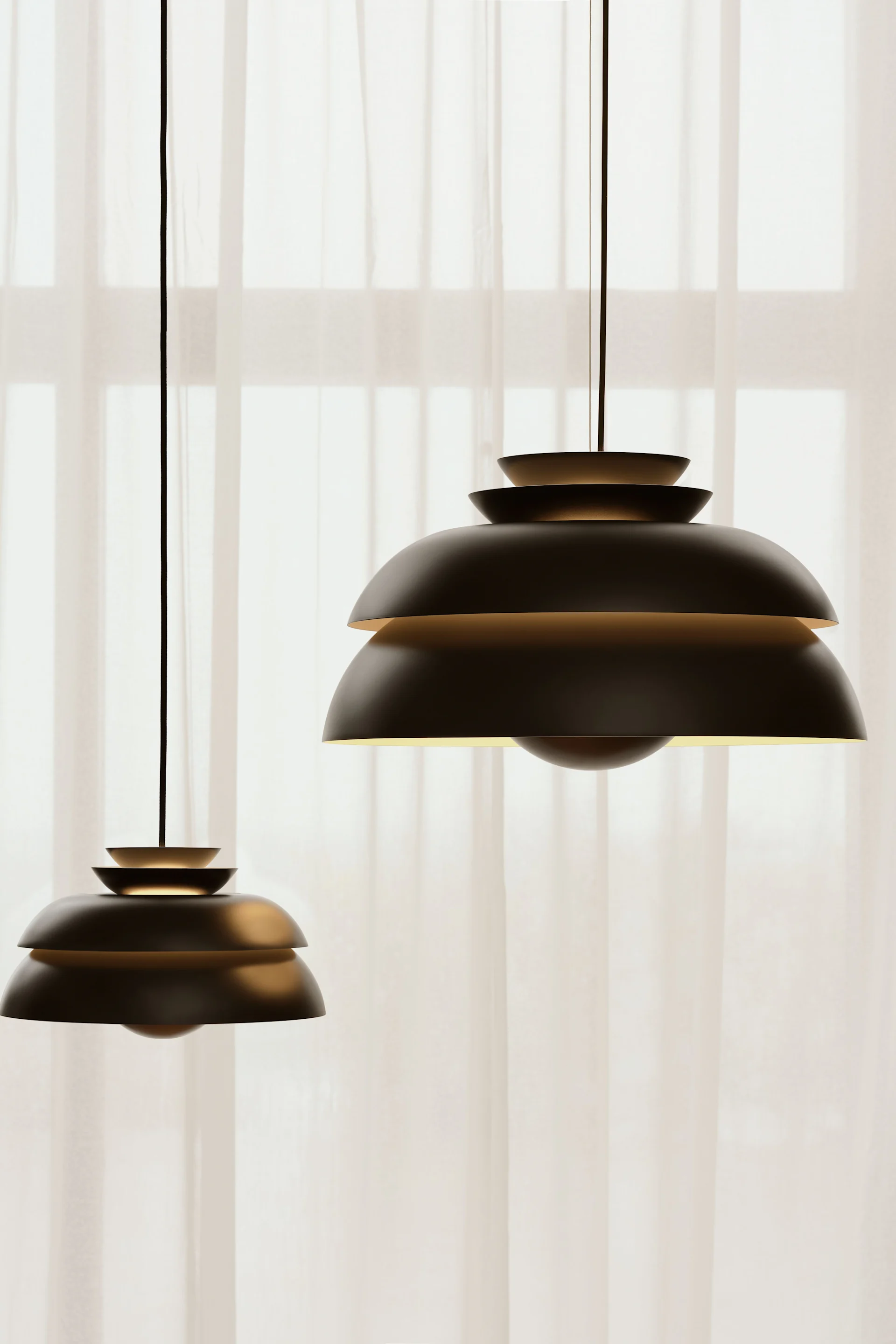
Large ceiling lights
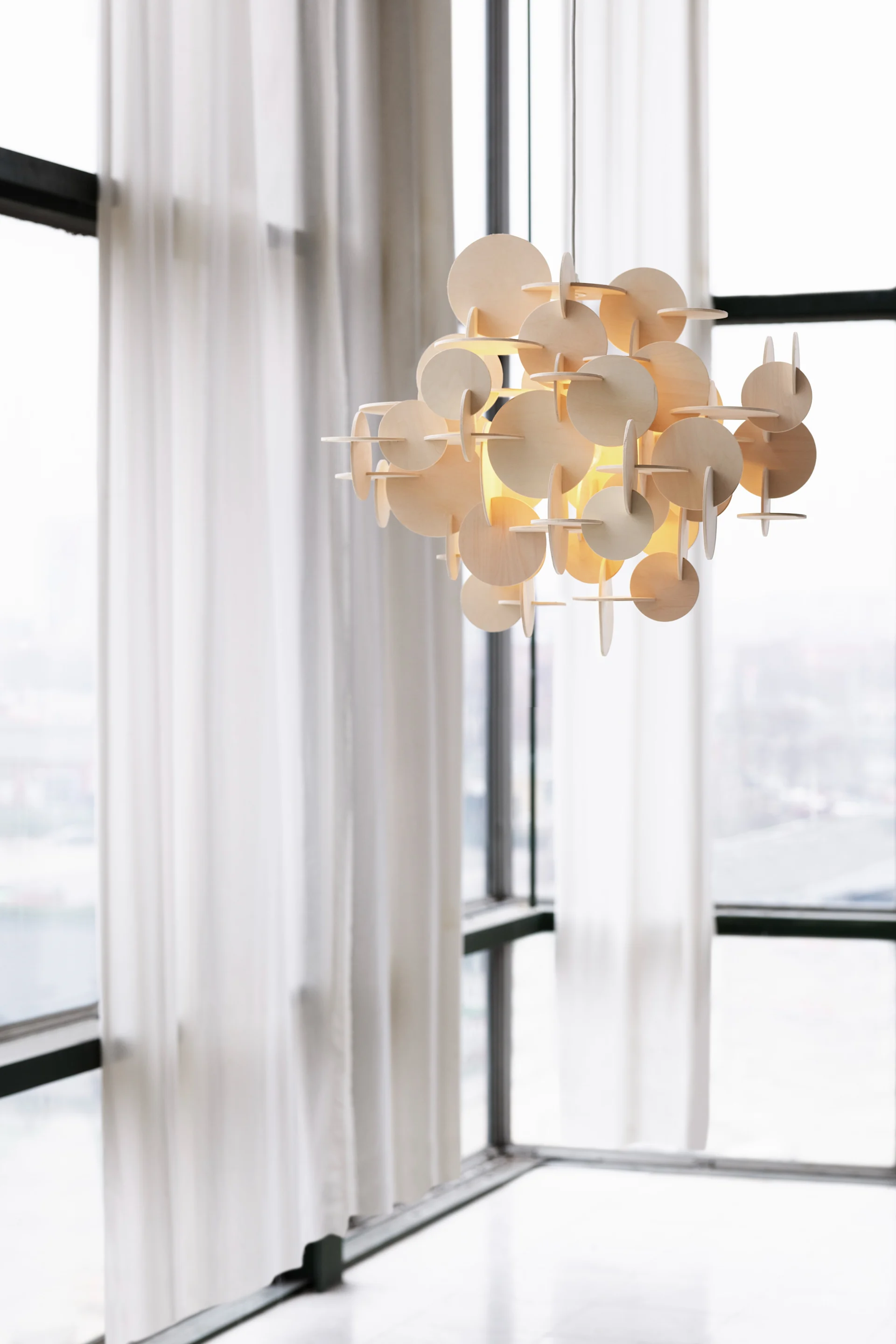
Large ceiling lights are particularly suitable for spacious living rooms with high ceilings. They visually fill the room, make a clear statement and can also serve as a central light source.
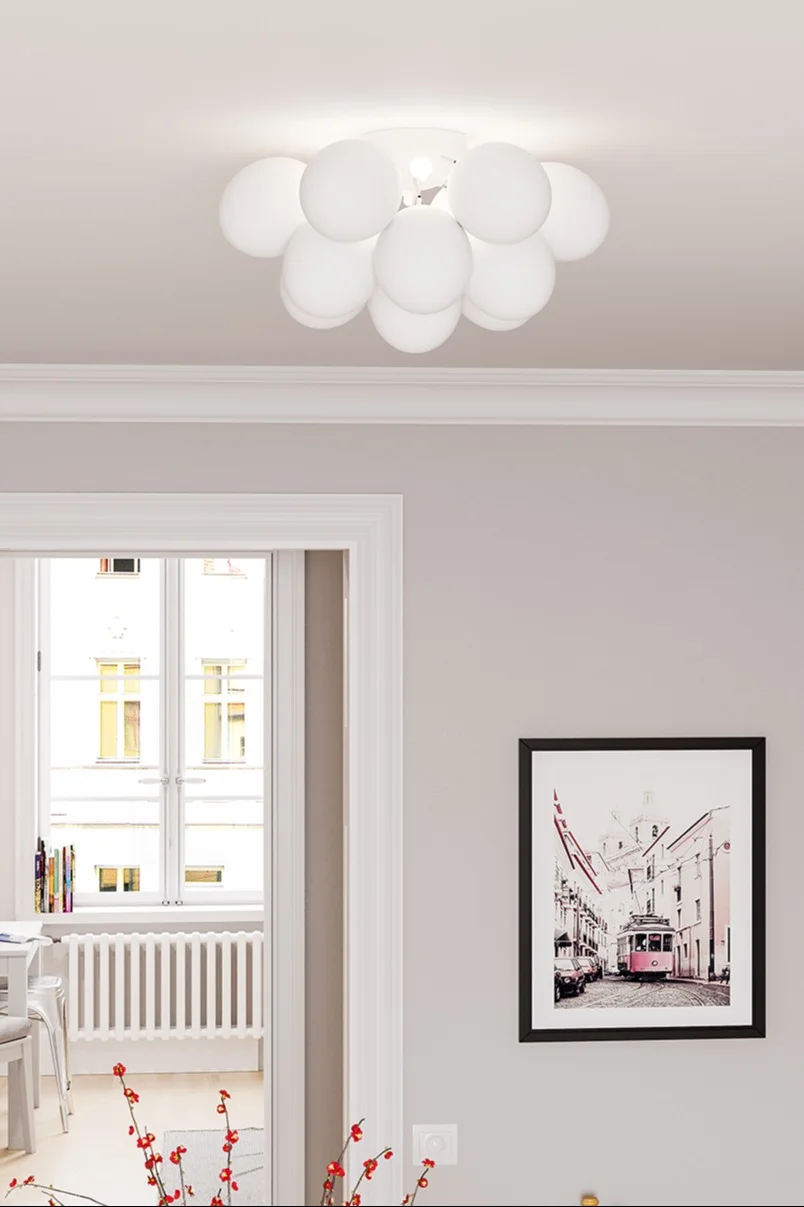
Modern large ceiling lights often impress with their organic shapes, multi-arm designs or unusual materials. They are shown to their best advantage when they have sufficient space and are not competing with too many other elements.
When choosing a light, you should make sure that it not only looks impressive, but also meets the lighting requirements of the room. In very large living rooms, it may be advisable to combine a large ceiling light with other light sources to create balanced and cosy lighting.
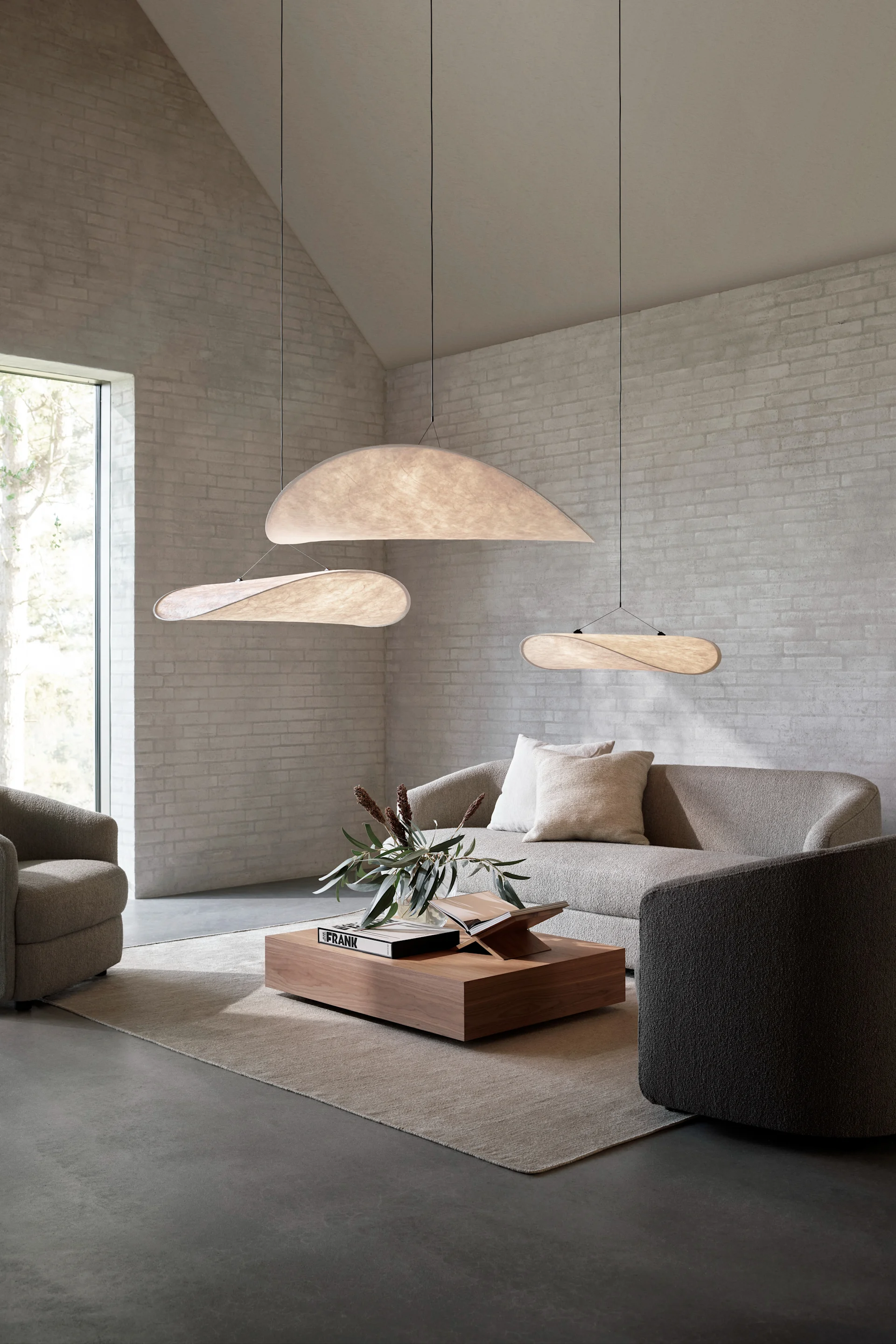
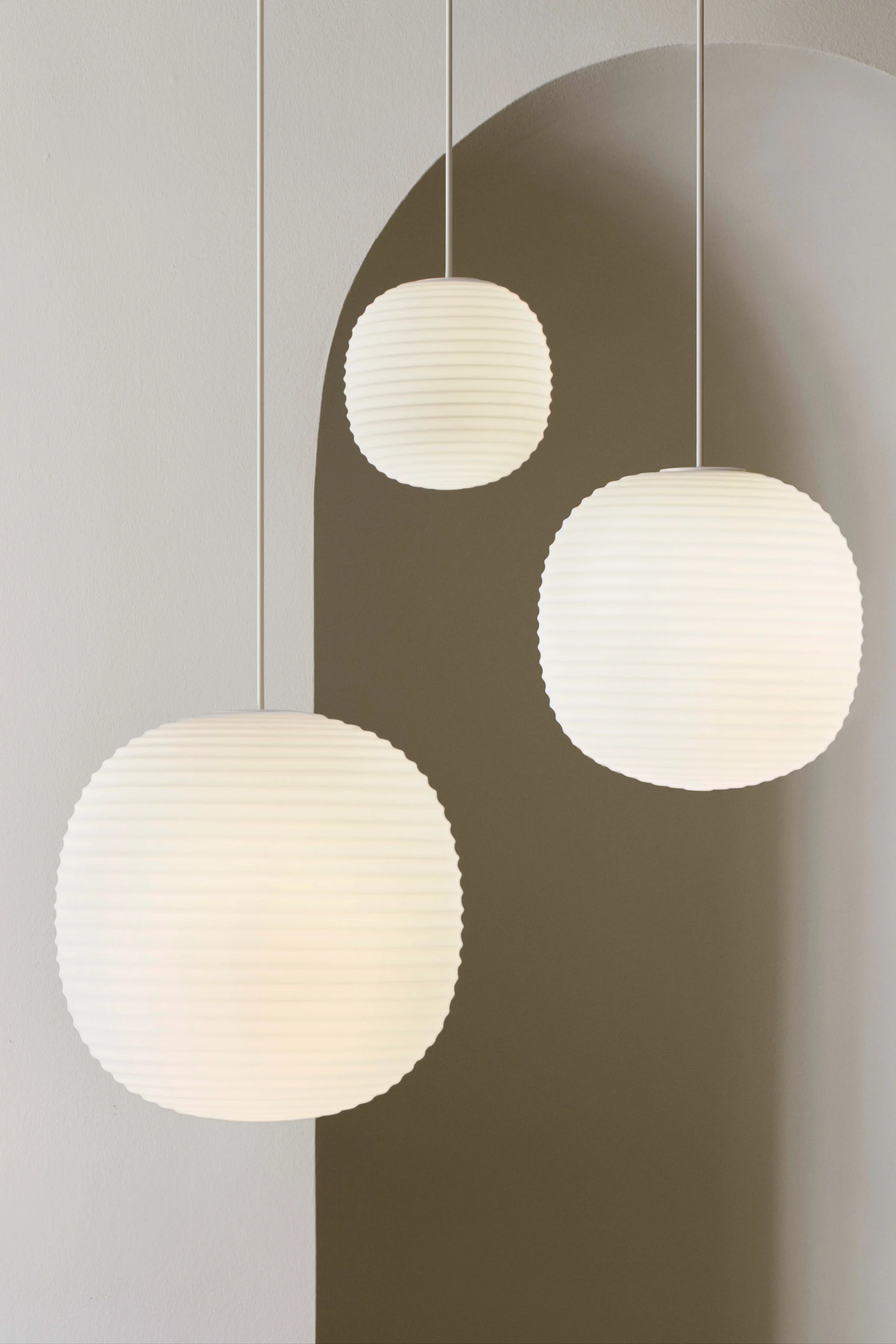
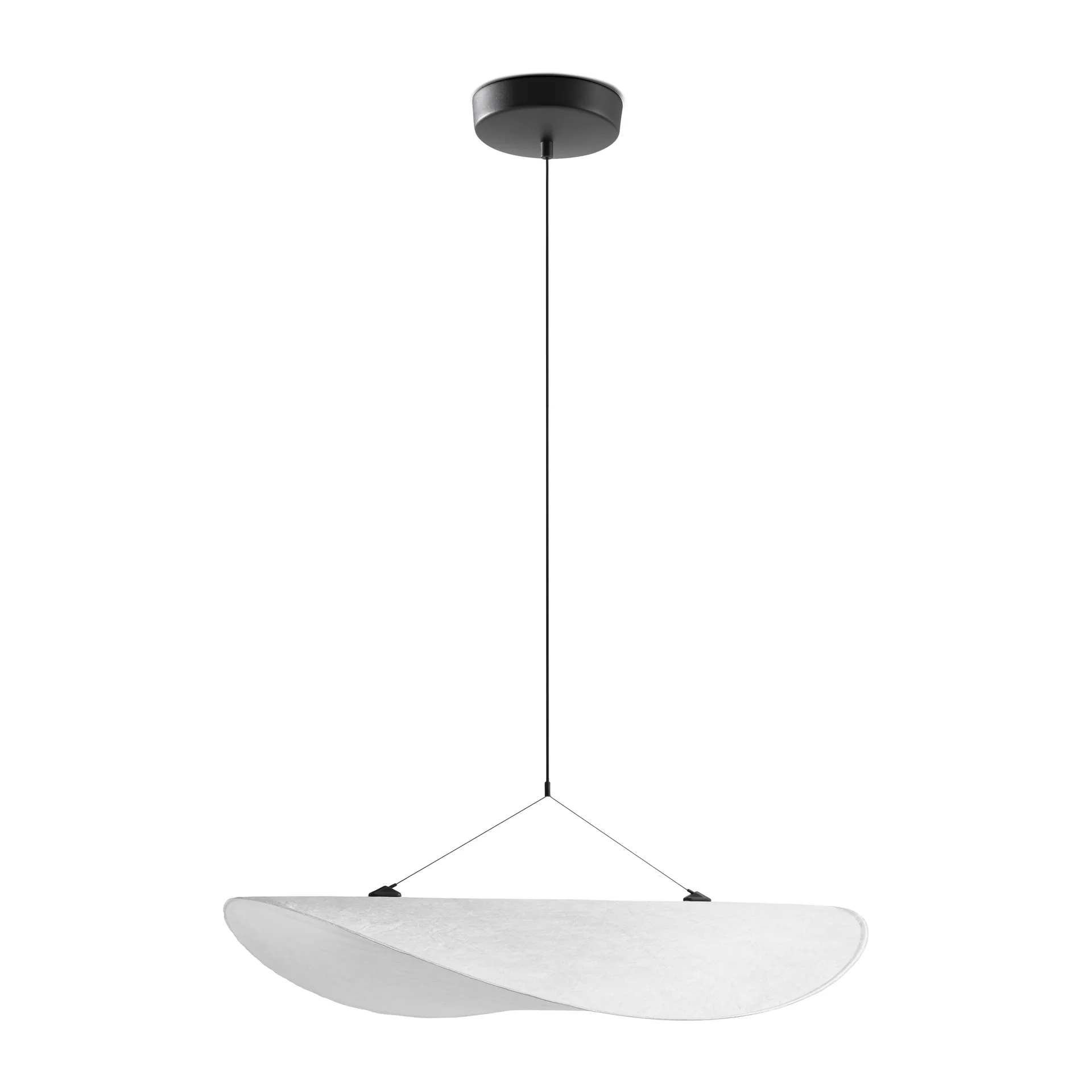
For living rooms with space - Tense pendant lamp x 3 from New Works
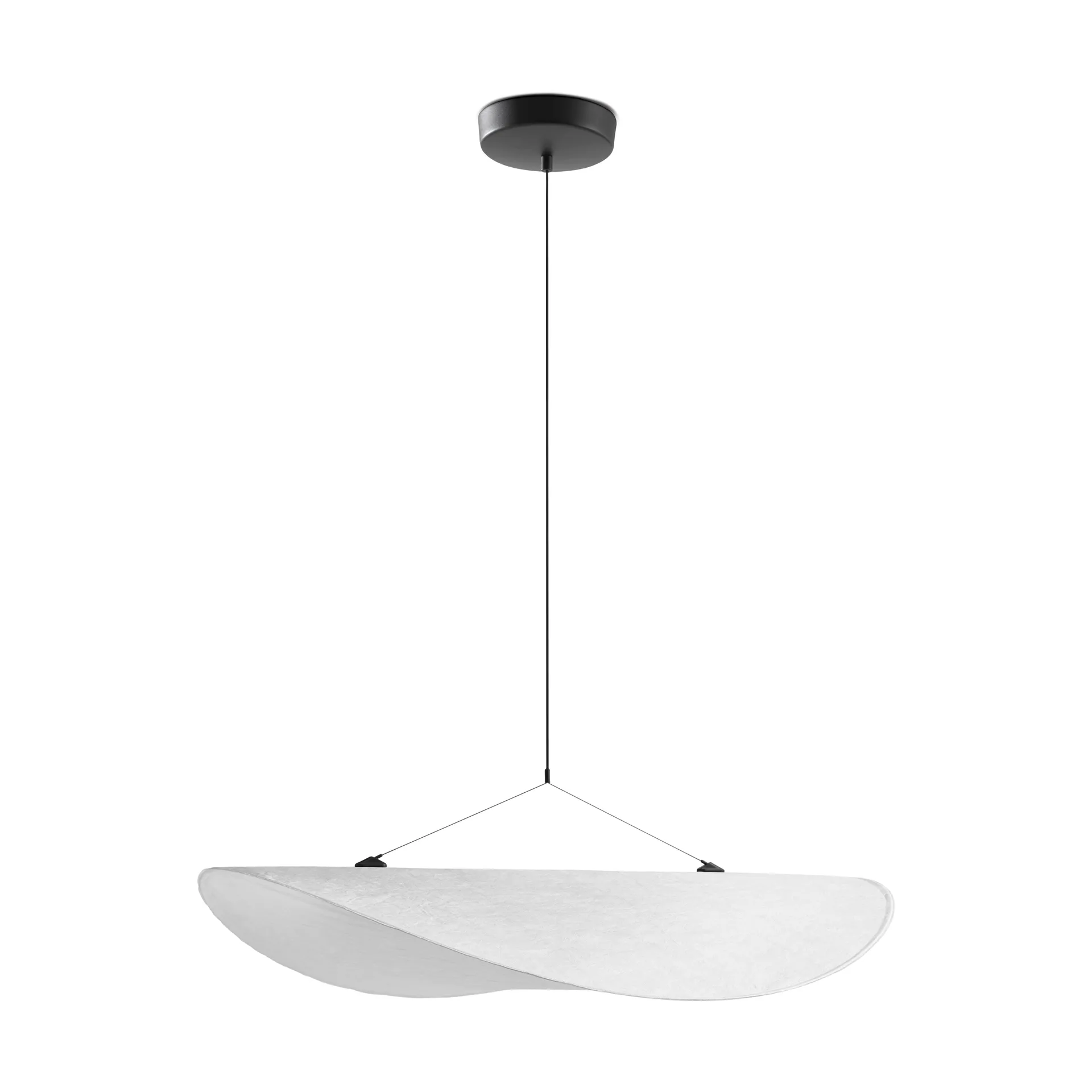
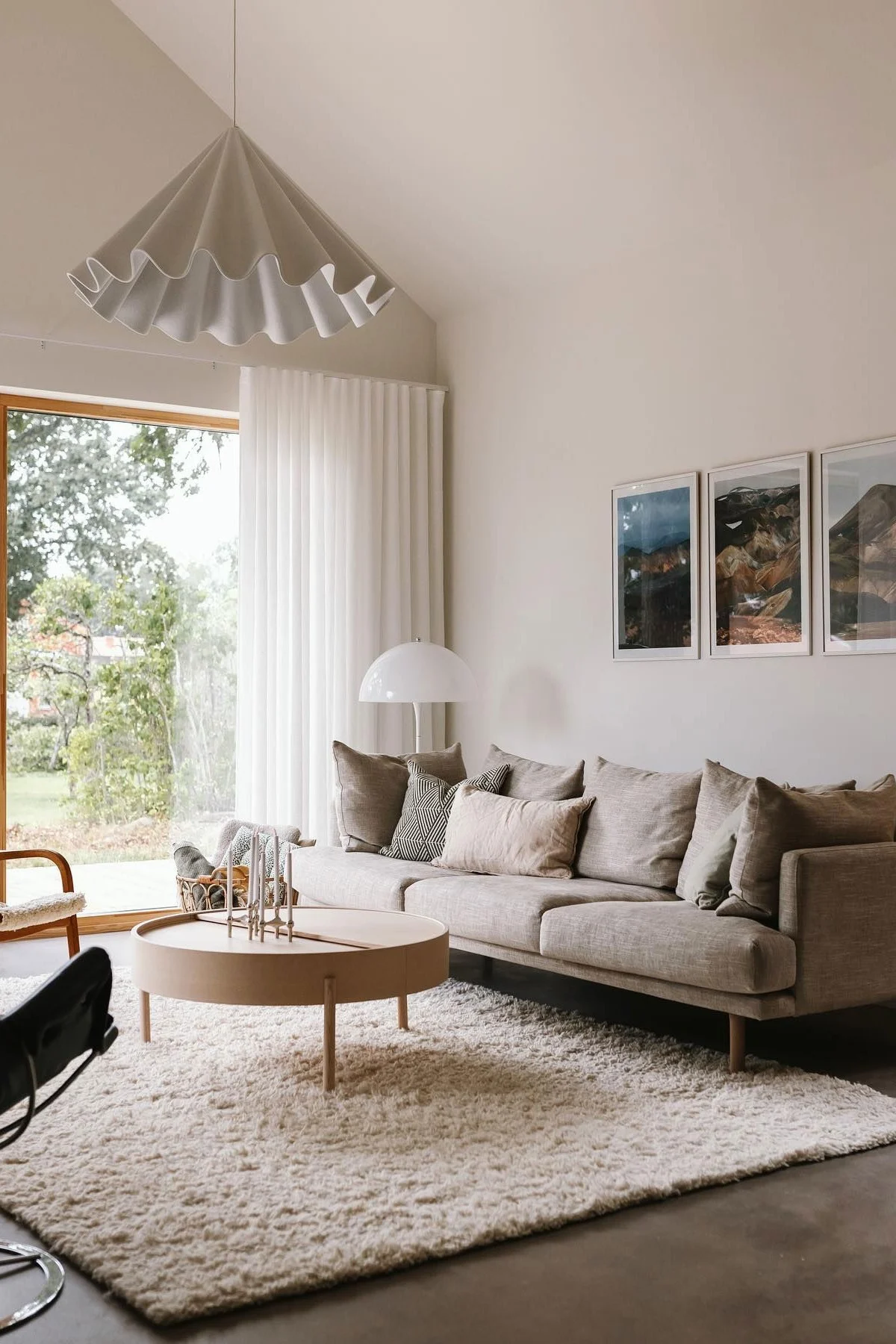
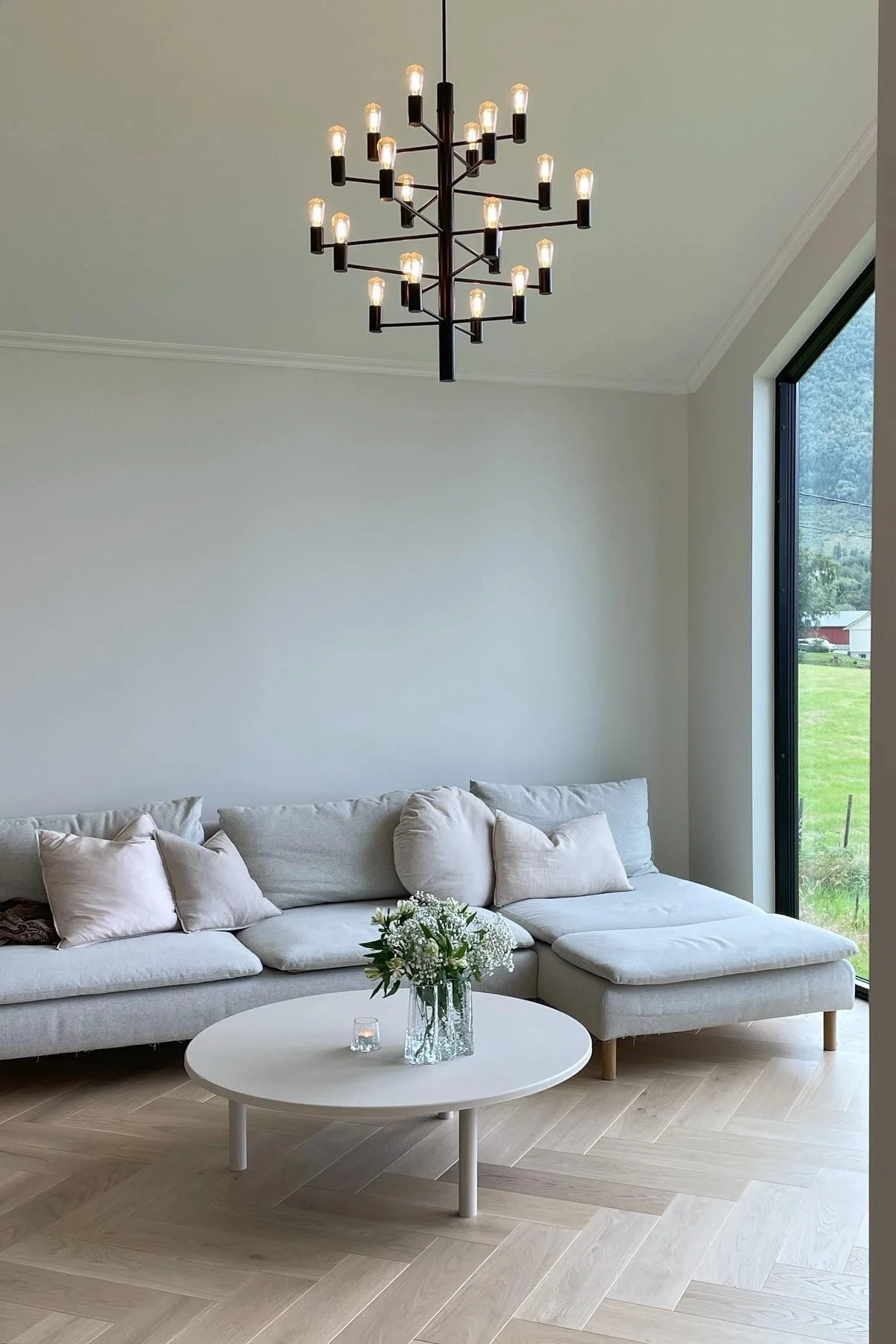
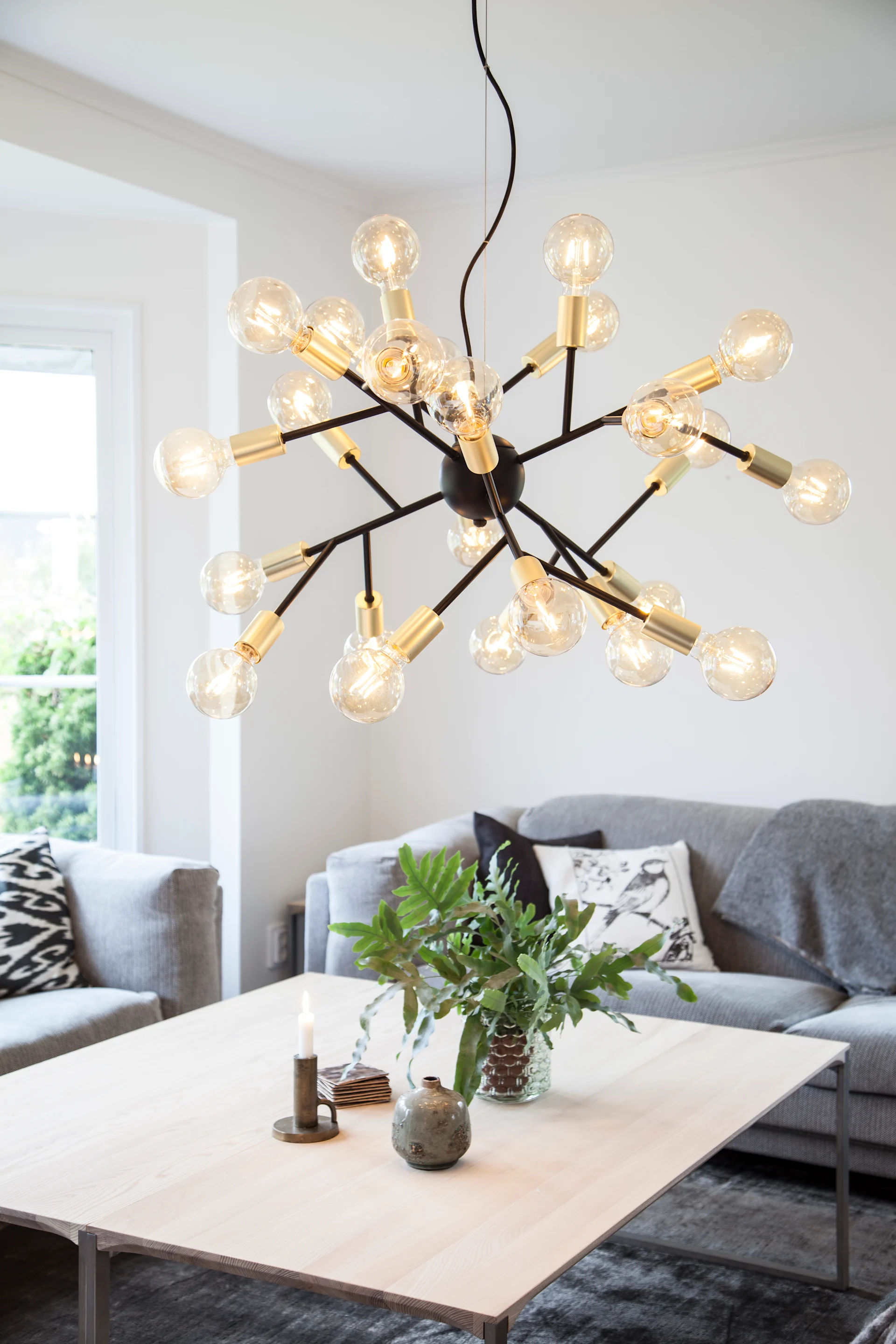
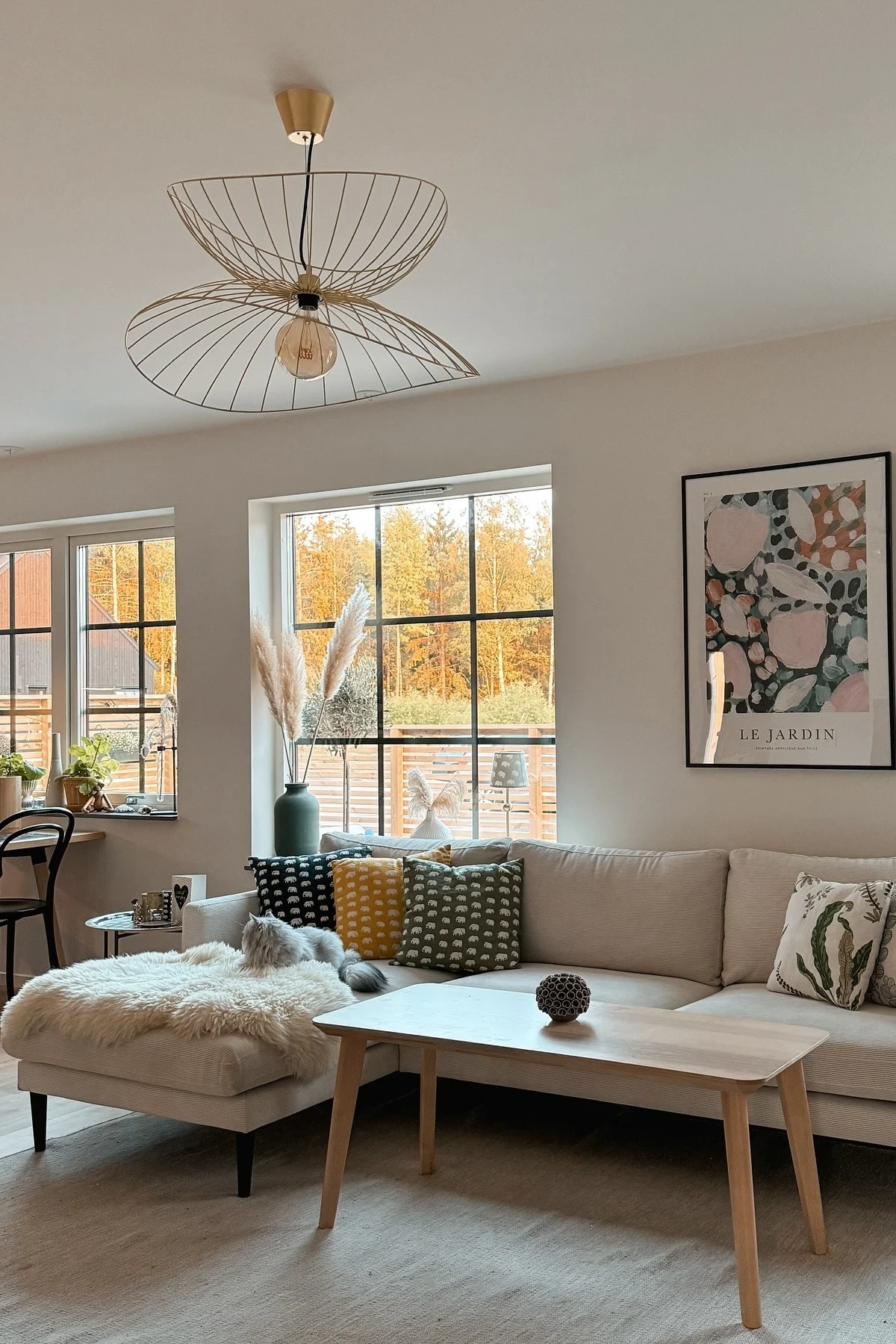
The right ceiling light for your living room combines function and atmosphere. Whether modern, natural Scandinavian or classic – the key thing is that the light fits your space, your interior design style and your lighting needs. In combination with other light sources, this creates balanced lighting that not only illuminates the living space, but also makes it cosy and inviting.
Are you looking for more inspiration for your living room? Then take a look here: Inspiration for the living room
You can find more tips here:
- Choosing the right light bulb
- How to plan the lighting in your home – our top tips
- Dining room lighting ideas
- Create magic in your kitchen with the perfect kitchen lighting ideas
- Scandinavian design lamps
Photography: Ardijan Mahmutaj, By Rydéns, &Tradition, Audo Copenhagen, Gubi, New Works, HAY, Tom Dixon, Normann Copenhagen, CO Bankeryd, Globen Lighting, Pilke, Louis Poulsen, Fritz Hansen, PR Home, Umage, @applaudden, @84.kvm, @villa_granset
Discover more ceiling lamps
See more